
Introduction
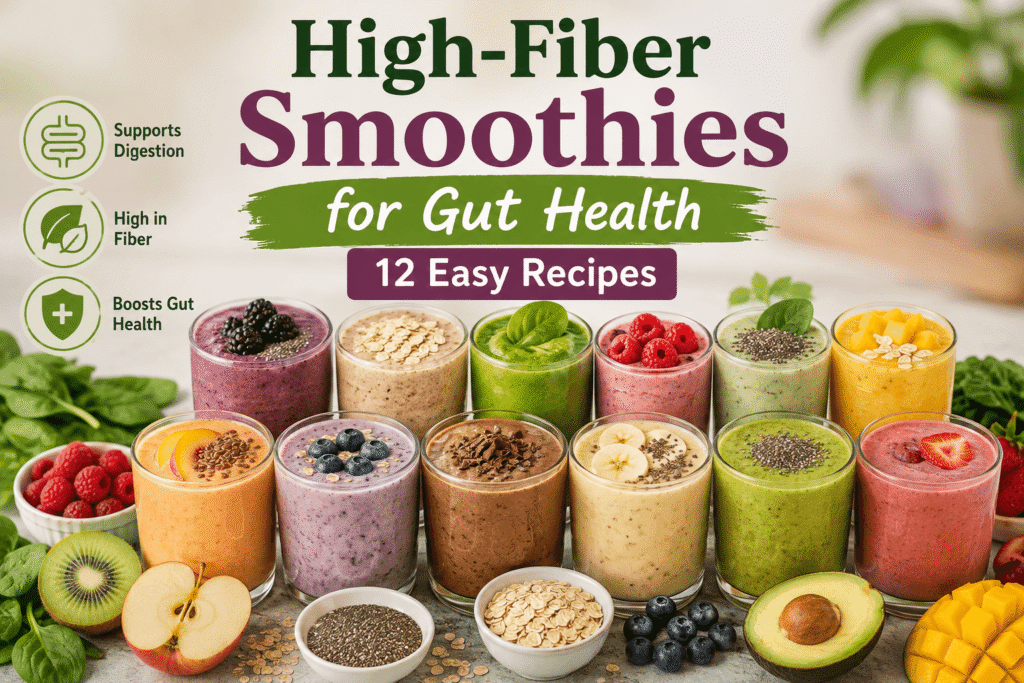
Starting the day with high-fiber smoothies for gut health is an easy way to add more fruit, vegetables, seeds, and whole-food ingredients to your routine. A well-balanced smoothie can provide fiber, protein, healthy fats, and plenty of flavor without requiring much preparation.
Fiber is especially useful because it supports normal digestion and provides fuel for beneficial gut microbes. Adults generally need around 22–34 grams of fiber per day, although individual needs vary.
The key is variety. Instead of relying on one “superfood,” combine different plant foods throughout the week.
Table of Contents
- Why Fiber Matters for Gut Health
- What Makes a Smoothie High in Fiber?
- 12 High-Fiber Smoothies for Gut Health
- How to Build a Gut-Friendly Smoothie
- Common Mistakes to Avoid
- Practical High-Fiber Smoothie Checklist
- When to Be Careful With Fiber
- FAQ
- Try More Healthy Recipes
- Conclusion
Why High-Fiber Smoothies Support Gut Health
Dietary fiber is found naturally in plant foods such as fruits, vegetables, whole grains, legumes, nuts, and seeds. Because the body does not fully digest fiber, some of it reaches the colon, where gut bacteria can use certain types as fuel.
That makes fiber more than a nutrient associated with regular bowel movements.
A varied, fiber-rich diet can support:
- Normal digestion
- Regular bowel movements
- A diverse gut microbiome
- Feeling full after meals
- Overall heart and metabolic health
- Better intake of plant-based nutrients
For smoothie lovers, the good news is that many delicious ingredients naturally contribute fiber.
What Makes a Smoothie High in Fiber?
Not every smoothie is automatically high in fiber. A drink made mostly from fruit juice, sweetened yogurt, or flavored syrups may contain plenty of sugar but relatively little fiber.
A better formula is to combine several fiber-rich ingredients.
Fiber-Rich Ingredients for Gut-Friendly Smoothies
Try:
- Raspberries or blackberries
- Pears or apples with the skin
- Kiwi
- Avocado
- Spinach
- Oats
- Chia seeds
- Ground flaxseed
- Nut or seed butter
For example, raspberries are particularly fiber-rich. NIDDK lists one cup of raspberries at about 8 grams of fiber.
How Fiber Supports Digestive Health
Greek yogurt, kefir, milk, soy milk, cottage cheese, nut butter, or seeds can make a smoothie more satisfying.
For a gut-friendly combination, yogurt or kefir with live cultures can also provide probiotics, while fruits, oats, and seeds provide prebiotic fibers. Probiotics and prebiotics are different, but both are commonly discussed in relation to the gut microbiome.
12 High-Fiber Smoothies for Gut Health
These recipes are designed to be flexible. Adjust the liquid to reach your preferred consistency and choose unsweetened ingredients whenever possible.
1. Raspberry Chia High-Fiber Smoothie
Ingredients:
- 1 cup raspberries
- 1 tablespoon chia seeds
- ½ cup plain Greek yogurt
- ¾ cup unsweetened milk
- ½ banana
- ½ teaspoon cinnamon
Method: Blend everything until smooth. Add more milk if needed.
Why it works: Raspberries and chia seeds provide a fiber-rich combination, while Greek yogurt adds protein.
2. Apple Cinnamon Fiber Smoothie
Ingredients:
- 1 small apple, cored and chopped
- ⅓ cup rolled oats
- ½ banana
- ¾ cup unsweetened milk
- ½ teaspoon cinnamon
- 1 tablespoon ground flaxseed
Blend until creamy.
Keeping the apple skin on adds more fiber. Apples contain both soluble and insoluble fiber, making them a useful addition to a balanced smoothie.
3. Green Kiwi Smoothie for Gut Health
Ingredients:
- 2 kiwis
- 1 cup baby spinach
- ½ banana
- 1 tablespoon chia seeds
- ¾ cup water or unsweetened milk
- A squeeze of fresh lemon
Blend until bright green and smooth.
The kiwi gives this smoothie a naturally refreshing flavor, while spinach and chia increase its plant-food variety.
4. Blueberry Flax Fiber Smoothie
Ingredients:
- 1 cup blueberries
- 1 tablespoon ground flaxseed
- ½ cup plain yogurt
- ½ banana
- ¾ cup unsweetened milk
- ½ teaspoon vanilla extract
Blend for 30–45 seconds.
Ground flaxseed is an easy way to add seeds without making the smoothie too chunky.
5. Pear Ginger Gut-Friendly Smoothie
Ingredients:
- 1 ripe pear
- ½ banana
- 1 tablespoon chia seeds
- ½ cup Greek yogurt
- ½–¾ cup water
- Small piece of fresh ginger
Blend until creamy.
This is a particularly good choice when you want something fresh and lightly spicy rather than very sweet.
6. Strawberry Oat High-Fiber Smoothie
Ingredients:
- 1 cup strawberries
- ⅓ cup rolled oats
- ½ banana
- ¾ cup milk
- ½ cup Greek yogurt
- 1 tablespoon ground flaxseed
Blend until smooth.
This recipe works well as a quick breakfast because oats, yogurt, fruit, and seeds provide a more balanced combination than fruit alone.
7. Chocolate Avocado Fiber Smoothie
Ingredients:
- ½ avocado
- 1 small banana
- 1 tablespoon unsweetened cocoa powder
- 1 tablespoon chia seeds
- ¾ cup unsweetened milk
- ½ cup Greek yogurt
Blend until silky smooth.
The avocado adds creaminess without requiring ice cream or added sugar.
8. Mango Spinach Gut-Healthy Smoothie
Ingredients:
- 1 cup frozen mango
- 1 cup baby spinach
- 1 tablespoon chia seeds
- ½ cup plain yogurt
- ¾ cup water
- Fresh lime juice
Blend until smooth.
Frozen mango makes this recipe thick and cold without needing much ice.
9. Peach Almond High-Fiber Smoothie
Ingredients:
- 1 cup sliced peaches
- 1 tablespoon almond butter
- 1 tablespoon ground flaxseed
- ½ cup Greek yogurt
- ¾ cup unsweetened almond milk
- Pinch of cinnamon
Blend until creamy.
The almond butter and flaxseed add healthy fats and make the texture richer.
10. Blackberry Kefir Gut-Friendly Smoothie
Ingredients:
- 1 cup blackberries
- ¾ cup plain kefir
- ½ banana
- 1 tablespoon chia seeds
- ½ cup water
- ½ teaspoon vanilla
Blend until smooth.
Kefir is a fermented food that can contain live microorganisms. Choose a plain product and check the label for live cultures if that is important to you.
11. Pear Spinach Fiber Smoothie
Ingredients:
- 1 ripe pear
- 1 cup spinach
- 1 tablespoon ground flaxseed
- ½ cup plain Greek yogurt
- ¾ cup water
- A squeeze of lemon
Blend until smooth.
This recipe is light enough for a snack while still providing several plant-based sources of fiber.
12. Berry Oat Smoothie for Gut Health
Ingredients:
- ½ cup strawberries
- ½ cup blueberries
- ⅓ cup rolled oats
- 1 tablespoon chia seeds
- ½ banana
- ¾ cup unsweetened milk
- ½ cup Greek yogurt
Blend until creamy.
This is one of the easiest recipes to prepare in batches. Freeze the berries and banana ahead of time, then blend when you’re ready.
How to Build a High-Fiber Smoothie for Gut Health
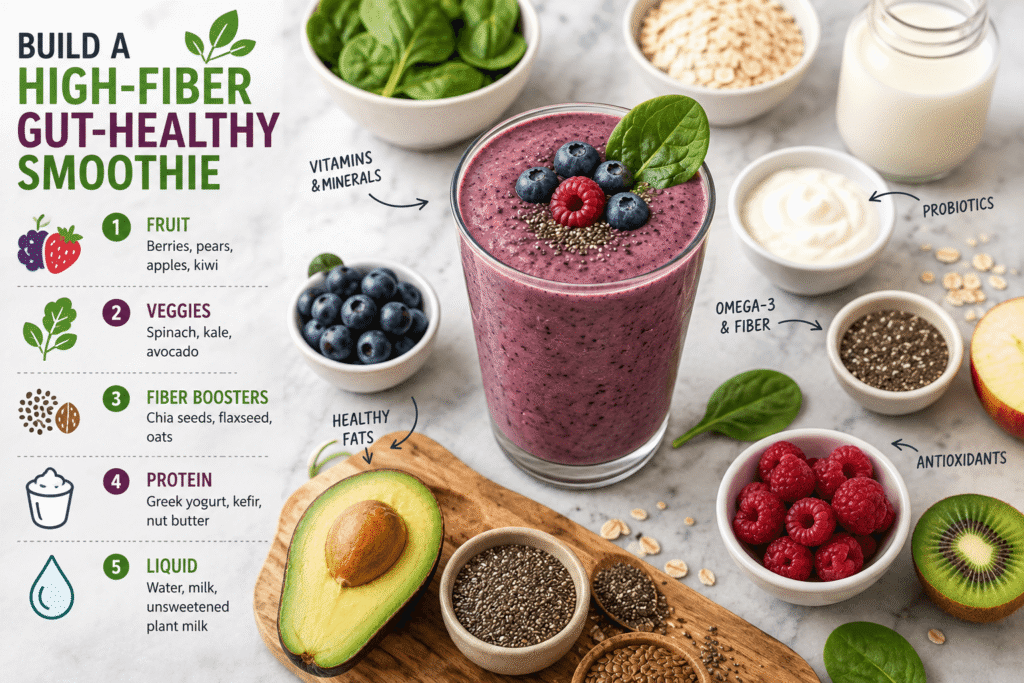
Once you understand the basic formula, you don’t need a recipe every morning.
Use this simple five-part approach:
1. Choose Fiber-Rich Fruits
Choose berries, kiwi, pear, apple, peach, mango, or banana.
2. Add a Vegetable
Spinach, avocado, cooked-and-cooled sweet potato, or another mild vegetable can increase plant-food variety.
3. Add a Fiber Booster
Choose one:
- Chia seeds
- Ground flaxseed
- Rolled oats
- Nut butter
- Psyllium, if recommended for you by a healthcare professional
4. Add Protein
Greek yogurt, kefir, cottage cheese, soy milk, or another protein-rich ingredient can make the smoothie more filling.
5. Adjust the Liquid
Use water, milk, soy milk, or another unsweetened option. Add liquid gradually rather than making the smoothie too thin.
Benefits of Fiber-Rich Smoothies for Digestion
If your current diet is low in fiber, don’t suddenly load your smoothie with multiple tablespoons of seeds, oats, and fiber supplements.
A rapid increase can cause gas, bloating, or abdominal discomfort. NIDDK recommends increasing fiber gradually, while adequate fluids can help fiber work effectively.
A practical approach is to start with one fiber-rich addition and increase gradually as your body adjusts.
Common High-Fiber Smoothie Mistakes to Avoid
Using Fruit Juice as the Main Liquid
Juice can make a smoothie sweeter, but whole fruit generally provides more fiber because the fruit’s structure remains intact.
Adding Too Many Sweet Ingredients
Banana, dates, honey, juice, and sweetened yogurt together can make a smoothie much sweeter than necessary.
Forgetting Protein
A fruit-only smoothie may not keep you satisfied for long. Add Greek yogurt, kefir, soy milk, or another protein source when appropriate.
Increasing Fiber Too Quickly
More fiber isn’t always better if your digestive system isn’t used to it. Increase gradually.
Treating Smoothies as a Cure
Gut-friendly foods can support a healthy eating pattern, but no single smoothie can cure a digestive disorder. If you have persistent digestive symptoms, speak with a qualified healthcare professional.
High-Fiber Smoothie Checklist
- Choose 1–2 whole fruits.
- Add a vegetable when it fits the recipe.
- Include chia, flax, oats, or another fiber-rich ingredient.
- Add protein for a more satisfying meal.
- Use unsweetened liquids when possible.
- Drink enough fluids throughout the day.
- Increase fiber gradually.
- Rotate ingredients instead of relying on one recipe.
- Check packaged ingredients for added sugars.
- Adjust recipes to your personal tolerance.
When to Be Careful With High-Fiber Foods
High-fiber foods are part of a healthy diet for many people, but individual tolerance varies.
People with certain digestive conditions may need personalized advice about the amount and type of fiber they eat. For example, people with IBS may respond differently to specific fiber-containing foods and may sometimes be advised to explore a low-FODMAP approach with a healthcare professional.
If increasing fiber causes persistent pain, severe bloating, diarrhea, constipation, or other concerning symptoms, speak with a doctor or registered dietitian.
FAQs About High-Fiber Smoothies for Gut Health
Are high-fiber smoothies good for digestion?
They can be a convenient way to add fruits, vegetables, oats, nuts, and seeds to your diet. Fiber supports regular bowel movements and certain types of fiber provide fuel for gut microbe
What is the best fruit for a high-fiber smoothie?
Raspberries are an excellent choice because they provide substantial fiber. Pears, apples with their skin, blackberries, and other berries are also useful options.
Can smoothies help with constipation?
A fiber-rich smoothie may help support regularity when combined with adequate fluid intake. Adults generally need about 22–34 grams of fiber daily, depending on age and sex.
Should I add chia seeds to smoothies?
Yes, chia seeds are a convenient fiber-rich ingredient. Start with a modest amount and increase gradually if your body is not accustomed to a high-fiber diet.
Are probiotics and fiber the same thing?
No. Probiotics are living microorganisms, while prebiotics are substances, often including certain fibers, that microorganisms can use. Foods such as yogurt and kefir can provide probiotics, while fruits, oats, vegetables, and seeds provide various fibers.
Try More Healthy Recipes
A healthy gut-friendly routine doesn’t have to depend on smoothies alone. Build variety into your week with high-fiber breakfasts, protein-rich meals, vegetables, legumes, whole grains, nuts, and seeds.
For more practical recipes and healthy meal ideas, explore Fit Food Journey and discover simple options you can add to your everyday routine.
Ready to Make Healthy Eating Easier?
Whether you’re building a healthier breakfast routine or looking for simple meal ideas, Fit Food Journey can help you turn nutritious ingredients into practical everyday meals.
Explore more healthy recipes on Fit Food Journey and make your next meal both delicious and nourishing.
Conclusion
The best high-fiber smoothies for gut health are not complicated. Start with whole fruits or vegetables, add a fiber-rich ingredient such as chia, flax, or oats, include a source of protein, and choose a suitable liquid.
The bigger goal is variety. Fiber comes in many forms, and eating a broad range of plant foods can help you build a more balanced diet.
Try one of these 12 recipes this week, increase fiber gradually, stay hydrated, and pay attention to how your body responds. With a few simple ingredients, a smoothie can become an easy part of a nutritious, gut-conscious lifestyle.