
Introduction
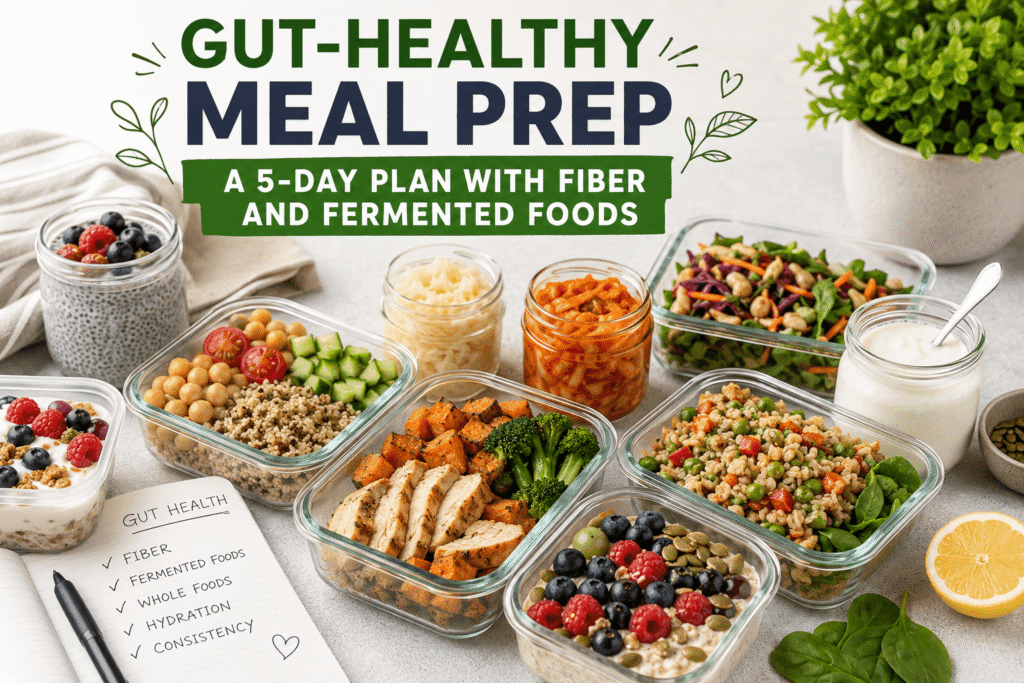
Gut-healthy meal prep is one of the simplest ways to make better food choices during a busy week. Instead of relying on last-minute takeout, skipped lunches, or highly processed snacks, you can prepare satisfying meals that include fiber-rich plants and fermented foods.
A healthy gut is not built through one “magic” ingredient. It is supported by consistent eating habits, a variety of plant foods, adequate hydration, and meals that are realistic enough to repeat. This five-day plan combines practical meal prep with foods such as oats, beans, vegetables, yogurt, kefir, kimchi, sauerkraut, and whole grains.
The goal is not perfection. The goal is to make gut-friendly eating easier, more enjoyable, and more sustainable.
Table of Contents
- Why Gut-Healthy Meal Prep Matters
- The Fiber and Fermented Foods Connection
- What to Prep Before Your 5-Day Plan
- 5-Day Gut-Healthy Meal Prep Plan
- Benefits of a Gut-Friendly Meal Plan
- Common Meal Prep Mistakes to Avoid
- Gut-Healthy Meal Prep Checklist
- Internal and External Link Suggestions
- Frequently Asked Questions
- Start Your Gut-Friendly Meal Prep Routine
Why Gut-Healthy Meal Prep Matters
Your digestive system does more than process food. It is home to a large community of microorganisms called the gut microbiome. These microorganisms interact with the foods you eat, especially dietary fiber and fermented foods.Fiber-rich foods help feed beneficial gut bacteria. Fermented foods may provide live microorganisms, depending on how they are made and stored. Together, these foods can support a more diverse and balanced eating pattern.Meal prep makes this approach more practical. When nutritious ingredients are already washed, cooked, and portioned, it becomes easier to build balanced meals without spending extra time every day.For many people, the biggest barrier is not knowing which foods are healthy. It is having those foods available when hunger hits. A prepared fridge can help solve that problem.
The Fiber and Fermented Foods Connection
Fiber Feeds Your Gut Bacteria
Fiber is found in plant foods such as beans, lentils, oats, vegetables, fruit, nuts, seeds, and whole grains. Unlike many other carbohydrates, fiber is not fully digested in the small intestine.
Instead, some types of fiber reach the large intestine, where gut bacteria can use them as fuel. This process may support digestive regularity and help create compounds that are beneficial for the gut environment.
Good meal prep sources of fiber include:
- Rolled oats
- Chickpeas and lentils
- Black beans
- Brown rice and quinoa
- Sweet potatoes
- Berries
- Apples and pears
- Leafy greens
- Broccoli
- Chia seeds and flaxseeds
Fermented Foods Add Variety
Fermented foods are made through a process in which microorganisms transform sugars and starches. Popular options include yogurt with live cultures, kefir, kimchi, sauerkraut, miso, tempeh, and certain pickles.
Not every fermented food contains live cultures by the time you eat it. Heat treatment and pasteurization can reduce or eliminate live microorganisms. When buying yogurt, kefir, kimchi, or sauerkraut, check labels for terms such as “live and active cultures” or “unpasteurized” where appropriate.
Fermented foods can be a flavorful addition to meal prep, but small portions are often enough. A spoonful of sauerkraut, a serving of yogurt, or a splash of kefir can add variety without making meals complicated.
What to Prep Before Your 5-Day Plan
A successful gut-healthy meal prep routine starts with a few flexible ingredients. Prepare these on one day, then mix and match them throughout the week.
Prep These Ingredients
- Cooked quinoa or brown rice
- Roasted sweet potatoes
- Roasted broccoli, carrots, and peppers
- A large batch of lentils or chickpeas
- Washed salad greens
- Chopped cucumbers and tomatoes
- Overnight oats or chia pudding jars
- Plain Greek yogurt or dairy-free yogurt with live cultures
- Kefir for smoothies
- Kimchi or sauerkraut
- Fresh fruit, including berries, bananas, apples, and pears
- Nuts, seeds, olive oil, lemon juice, and herbs
Keep fermented foods in separate containers and add them shortly before eating. This helps preserve their flavor and texture.
5-Day Gut-Healthy Meal Prep Plan
Day 1: Start With Oats, Beans, and Yogurt
Breakfast: Berry Overnight Oats
Combine rolled oats, chia seeds, milk or a dairy-free alternative, plain yogurt, berries, and a small amount of cinnamon. Refrigerate overnight.
This breakfast provides soluble fiber from oats and chia seeds, plus protein and probiotics from yogurt with live cultures.
Lunch: Chickpea Quinoa Salad
Build a bowl with quinoa, chickpeas, cucumber, cherry tomatoes, parsley, spinach, olive oil, and lemon juice. Add a spoonful of sauerkraut just before serving.
Dinner: Salmon, Sweet Potato, and Broccoli Bowl
Serve baked salmon with roasted sweet potato and broccoli. Add a yogurt-herb sauce made with plain yogurt, lemon, dill, and black pepper.
Day 2: Add Lentils and Kefir
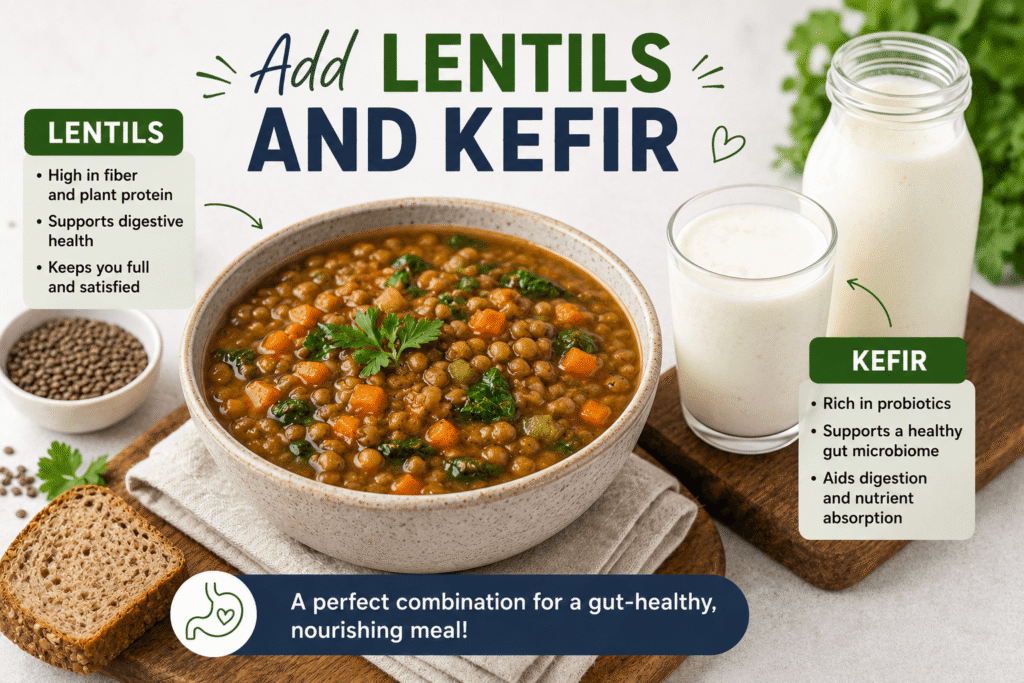
Breakfast: Kefir Smoothie
Blend plain kefir with a banana, frozen berries, spinach, oats, and ground flaxseed. This is a quick option for busy mornings.
Lunch: Lentil Vegetable Soup
Prepare a large pot of lentil soup with carrots, celery, tomatoes, onions, garlic, and leafy greens. Serve with whole-grain bread.
Dinner: Chicken Grain Bowl With Kimchi
Layer brown rice, shredded chicken, roasted vegetables, edamame, and avocado. Add a small serving of kimchi for a tangy finish.
Day 3: Focus on Color and Plant Variety
Breakfast: Yogurt Bowl With Fruit and Seeds
Top plain Greek yogurt or plant-based yogurt with sliced pear, walnuts, pumpkin seeds, and a spoonful of oats.
Lunch: Dense Bean Salad
Mix black beans, kidney beans, corn, bell peppers, red onion, cilantro, lime juice, olive oil, and cumin. This meal keeps well in the fridge and becomes more flavorful over time.
Dinner: Tempeh Stir-Fry
Cook tempeh with broccoli, mushrooms, snap peas, and a light ginger-garlic sauce. Serve with quinoa or brown rice.
Tempeh is a fermented soy food that adds plant-based protein and a hearty texture to meal prep meals.
Day 4: Keep It Simple and Satisfying
Breakfast: Chia Pudding With Kefir
Mix chia seeds, kefir, milk, vanilla, and berries. Let the mixture sit overnight until thick.
Lunch: Mediterranean Chickpea Wrap
Fill a whole-grain wrap with chickpeas, spinach, cucumber, tomatoes, roasted peppers, hummus, and a yogurt-based dressing. Add a side of fruit.
Dinner: Turkey Meatballs With Whole-Grain Pasta
Serve lean turkey meatballs with whole-grain pasta, tomato sauce, spinach, and roasted zucchini. Add a simple side salad topped with pumpkin seeds.
Day 5: Finish the Week With Flexible Leftovers
Breakfast: Savory Oat Bowl
Cook oats with water or broth, then top with a soft-boiled egg, sautéed spinach, mushrooms, avocado, and a spoonful of kimchi.
Lunch: Leftover Grain and Veggie Bowl
Use remaining quinoa, roasted vegetables, beans, and greens. Add a lemon-tahini dressing and a small serving of sauerkraut.
Dinner: Sheet Pan Chicken and Vegetables
Roast chicken thighs or chicken breast with Brussels sprouts, carrots, onions, and sweet potatoes. Serve with a side of plain yogurt mixed with herbs.
This final meal is ideal for using ingredients before they spoil and reducing food waste.
Benefits of Gut-Healthy Meal Prep
A gut-friendly meal plan can make healthy eating feel more manageable. It also helps you include more plant foods without needing complicated recipes.
Potential advantages include:
- More consistent fiber intake
- Greater variety of vegetables, fruit, legumes, and whole grains
- Easier access to protein-rich meals
- Less reliance on highly processed convenience foods
- Better meal planning during busy workweeks
- More opportunities to include fermented foods in small, enjoyable portions
- Reduced food waste through planned leftovers
Fiber should be increased gradually, especially if your current diet is low in plant foods. Drinking water throughout the day can also support comfortable digestion when increasing fiber intake.
Common Mistakes to Avoid
Adding Too Much Fiber Too Quickly
A sudden jump from low-fiber meals to large amounts of beans, bran, and raw vegetables may cause bloating or discomfort. Start with manageable portions and increase gradually.
Treating Fermented Foods as a Quick Fix
Fermented foods can be part of a balanced eating pattern, but they are not a replacement for vegetables, fruit, whole grains, sleep, hydration, or medical care.
Forgetting Protein
Fiber-rich meals are more satisfying when they also include protein. Add chicken, fish, eggs, tofu, tempeh, Greek yogurt, beans, lentils, or cottage cheese.
Preparing the Same Meal Every Day
Repeating meals can save time, but eating a wider range of plant foods may help support dietary variety. Rotate fruits, vegetables, grains, beans, herbs, and fermented foods from week to week.
Ignoring Food Storage
Store cooked foods in airtight containers and refrigerate promptly. Keep sauces and fermented toppings separate until serving when possible.
Gut-Healthy Meal Prep Checklist
Use this quick checklist before your weekly grocery trip:
- Choose two fiber-rich breakfast options
- Prepare one bean or lentil-based lunch
- Cook one whole grain
- Roast at least three vegetables
- Buy two types of fruit
- Include one yogurt or kefir option
- Choose one fermented vegetable, such as kimchi or sauerkraut
- Add protein to each meal
- Keep quick snacks available, such as fruit, nuts, yogurt, or hummus
- Plan one flexible leftover meal
Gut-Friendly Eating Easier This Week
You do not need a complicated diet to support better digestion. Start with one prepared breakfast, one bean-based lunch, and one fermented food you genuinely enjoy.
Explore more practical recipes, meal prep guides, and balanced food ideas at Fit Food Journey. Build a weekly routine that fits your schedule, your budget, and your taste preferences.
Frequently Asked Questions
What is gut-healthy meal prep?
Gut-healthy meal prep is the practice of preparing meals that include fiber-rich foods, plant diversity, and fermented foods. It helps make gut-friendly eating easier during busy weekdays.
Which foods are best for gut health meal prep?
Helpful options include oats, beans, lentils, vegetables, fruit, whole grains, nuts, seeds, yogurt with live cultures, kefir, kimchi, sauerkraut, tempeh, and miso.
How much fiber should I eat each day?
Fiber needs vary by age, sex, calorie intake, and health needs. A practical approach is to increase fiber gradually by adding more vegetables, fruit, legumes, and whole grains to meals.
Can I eat fermented foods every day?
Many people can include fermented foods regularly in small portions. Start slowly, especially if you are new to foods such as kefir, kimchi, or sauerkraut. If you have a medical condition or specific digestive symptoms, speak with a qualified healthcare professional.
Is meal prep good for digestion?
Meal prep can support digestion by making balanced meals more consistent. It can also help you reduce reliance on heavily processed foods and include more fiber-rich ingredients throughout the week.
Conclusion
Gut-healthy meal prep is not about following strict rules or buying expensive specialty foods. It is about creating simple meals that include fiber, protein, colorful plants, and fermented foods in realistic amounts.
This five-day plan gives you a flexible starting point. Prepare a few core ingredients, mix them into satisfying meals, and adjust portions based on your preferences. Over time, these small choices can make healthy eating feel more convenient and more enjoyable.