
Introduction
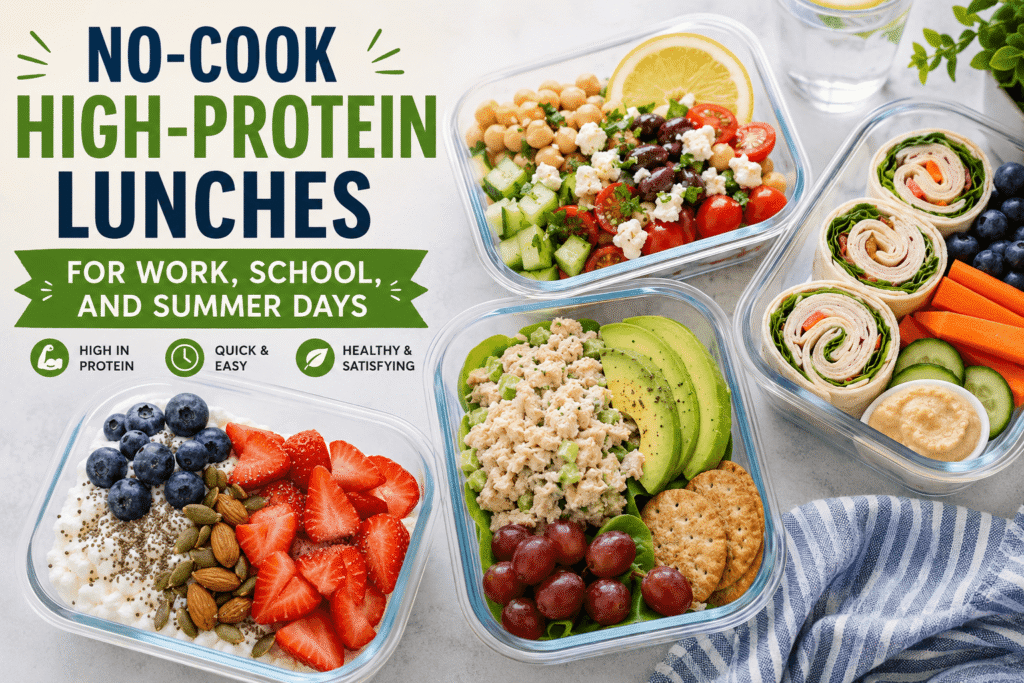
No-Cook High-Protein Lunches are an easy solution for busy workdays, school schedules, and hot summer days when you want a healthy meal without turning on the stove. These quick lunch ideas combine protein-rich foods like Greek yogurt, cottage cheese, tuna, chicken, eggs, beans, and hummus with fresh vegetables, fruit, and whole grains. They are filling, convenient, and easy to pack for work, school, travel, or outdoor activities.
Table of Contents
- Why No-Cook High-Protein Lunches Matter
- What Makes a Lunch High in Protein?
- 10 No-Cook High-Protein Lunch Ideas
- How to Build a Balanced No-Cook Lunch
- Best Ingredients to Keep on Hand
- Tips for Work, School, and Summer
- Common Mistakes to Avoid
- No-Cook Lunch Checklist
- Internal and External Link Opportunities
- A Simple Weekly Lunch Plan
- FAQ
- Conclusion
Why No-Cook High-Protein Lunches Matter
Busy schedules often make lunch an afterthought. You may grab a pastry, skip lunch completely, or rely on takeaway because cooking feels like too much work.
No-cook meals offer a practical alternative.
They can help you:
- Save time during busy weekdays
- Avoid unnecessary takeaway meals
- Create portable lunches
- Increase protein intake through convenient foods
- Add more vegetables and fruit to your day
- Reduce dependence on a microwave
- Keep summer meals light and refreshing
A balanced lunch does not need to be complicated. Harvard’s Healthy Eating Plate recommends emphasizing vegetables and fruit, whole grains, healthy protein sources, and healthy fats.
That makes the no-cook approach surprisingly flexible.
What Makes a Lunch High in Protein?
Protein can come from both animal and plant foods. Convenient options include tuna, salmon, chicken, turkey, eggs, Greek yogurt, cottage cheese, edamame, beans, lentils, tofu, nuts, seeds, and hummus.
However, protein quality matters alongside the amount of protein. Different protein foods come packaged with different amounts of fiber, fats, sodium, and other nutrients.
Instead of focusing only on grams of protein, think about the whole meal.
For example:
Protein + vegetables + whole-grain carbohydrate + healthy fat
could become:
- Tuna + cucumber + whole-grain crackers + avocado
- Greek yogurt + berries + oats + chia seeds
- Chicken + salad vegetables + whole-grain wrap + hummus
- Chickpeas + tomatoes + quinoa + olive oil
This approach creates lunches that are more varied and satisfying.
10 Easy No-Cook High-Protein Lunch Ideas
1. Greek Yogurt Berry Power Bowl
Start with plain Greek yogurt and add berries, chia seeds, pumpkin seeds, and a small portion of oats or low-sugar granola.
For extra flavor, add cinnamon or a spoonful of natural peanut butter.
This works particularly well for breakfast-style lunches or hot summer days when you want something cold and refreshing.
2. Tuna and Avocado Wrap
Combine canned tuna with avocado, lemon juice, black pepper, and chopped cucumber.
Place the mixture inside a whole-grain tortilla and add spinach or lettuce.
For a stronger flavor, add mustard or a little Greek yogurt instead of mayonnaise.
Quick tip: Keep the filling chilled and assemble the wrap shortly before eating.
3. Cottage Cheese Snack Plate
Cottage cheese can become the centerpiece of an easy cold lunch.
Serve it with:
- Cherry tomatoes
- Cucumber slices
- Whole-grain crackers
- Berries or grapes
- Pumpkin seeds
- A boiled egg
This combination gives you protein along with produce, crunch, and different textures.
4. Chicken Hummus Wrap
Use ready-to-eat cooked chicken or leftover chilled chicken as your protein base.
Add hummus, shredded lettuce, cucumber, tomato, and grated carrot to a whole-grain wrap.
Roll it tightly and store it in an insulated lunch bag.
This is an excellent work lunch because it can be eaten cold and prepared quickly.
5. Chickpea and Feta Salad
For a vegetarian option, combine canned chickpeas with cucumber, tomatoes, red onion, parsley, feta, and lemon juice.
Add a drizzle of olive oil and black pepper.
Chickpeas provide plant-based protein and fiber, while the vegetables add color and freshness.
Harvard’s nutrition guidance highlights beans and other plant foods as useful components of balanced meals.
6. Turkey and Cheese Roll-Ups
Place sliced turkey and cheese on a plate or lunchbox compartment and roll them together.
Add:
- Bell pepper strips
- Apple slices
- Whole-grain crackers
- Hummus
- A small handful of nuts
This is particularly useful for school lunches because the individual components are easy to portion and eat.
For children, presentation matters. Harvard’s lunchbox guidance recommends combining colorful fruits and vegetables with a protein source and whole grains.
7. Edamame Crunch Bowl
Use ready-to-eat edamame with shredded cabbage, carrots, cucumber, avocado, and sesame seeds.
Add a simple dressing made from soy sauce, lime juice, and a small amount of sesame oil.
You can also add cooked quinoa if you have some prepared in advance.
This makes a refreshing plant-forward lunch with plenty of texture.
8. Salmon and Cream Cheese Bagel
Use smoked salmon, light cream cheese, cucumber, tomato, and fresh greens on a whole-grain bagel.
Add lemon juice and black pepper for extra flavor.
Because smoked salmon can be relatively high in sodium, balance the meal with plenty of fresh produce and choose portions that fit your overall dietary needs.
9. White Bean Mediterranean Bowl
Combine canned white beans with cherry tomatoes, cucumber, olives, parsley, feta, and roasted red peppers.
Finish with lemon juice and olive oil.
For additional carbohydrates, add whole-grain pita or crackers.
This meal is especially useful in summer because it can be served chilled and prepared without turning on the oven.
10. High-Protein Snack Box
When you need something extremely simple, create a lunchbox from several protein-rich foods.
Try:
- Greek yogurt
- Boiled eggs
- Cheese cubes
- Hummus
- Carrot sticks
- Grapes
- Whole-grain crackers
- Pumpkin seeds
Think of it as a customizable adult lunchable.
The advantage is flexibility. You can change the ingredients every week without learning a new recipe.
How to Build a Balanced No-Cook Protein Lunch
You do not need a complicated recipe formula.
Use this simple five-part framework:
Step 1: Choose Your Protein
Pick one main protein:
- Tuna
- Salmon
- Chicken
- Turkey
- Greek yogurt
- Cottage cheese
- Eggs
- Beans
- Chickpeas
- Edamame
- Tofu
- Hummus
Step 2: Add Color
Choose two or more fruits or vegetables.
Good choices include cucumber, tomatoes, carrots, peppers, berries, apples, grapes, spinach, cabbage, and leafy greens.
Step 3: Add Quality Carbohydrates
Try whole-grain bread, wraps, oats, quinoa, whole-grain crackers, or fruit.
Step 4: Add Healthy Fats
Avocado, nuts, seeds, olive oil, and nut butter can make lunch more satisfying.
Step 5: Add Flavor
Use lemon juice, herbs, mustard, salsa, yogurt-based sauces, or simple vinaigrettes.
This approach keeps your lunches interesting without requiring complicated recipes.
Best Foods for No-Cook High-Protein Lunches
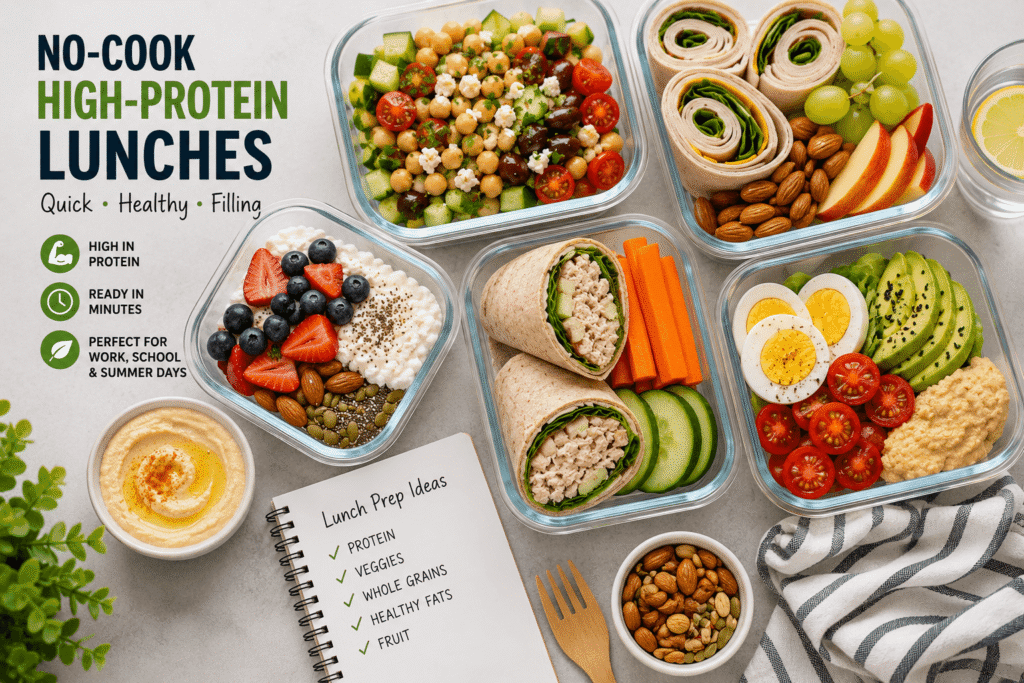
A well-stocked kitchen makes no-cook lunches much easier.
Refrigerator Staples
- Greek yogurt
- Cottage cheese
- Eggs
- Ready-to-eat chicken
- Cheese
- Hummus
- Fresh vegetables
- Fresh fruit
Pantry Staples
- Canned tuna
- Canned salmon
- Chickpeas
- Black beans
- White beans
- Whole-grain crackers
- Nut butter
- Pumpkin seeds
- Chia seeds
Freezer Staples
- Frozen berries
- Frozen edamame
- Frozen fruit for smoothies
Buying versatile ingredients means you can create several different lunches from the same basic shopping list.
No-Cook Lunch Tips for Work, School, and Summer
Use an Insulated Lunch Bag
Perishable foods should stay cold during transport. The FDA recommends refrigerating foods that require refrigeration promptly and following the two-hour rule for foods that need refrigeration when left at room temperature.
For long commutes, school days, outdoor activities, or hot weather, use ice packs and an insulated lunch container.
Keep Wet Ingredients Separate
Salad dressing, salsa, and juicy vegetables can make wraps and sandwiches soggy.
Pack sauces separately and add them just before eating.
Prepare Components, Not Entire Meals
You do not have to prepare five identical lunches.
Instead, prepare flexible ingredients such as:
- Washed vegetables
- Portion-sized nuts
- Cooked eggs
- Washed fruit
- Ready-to-eat protein
- Individual yogurt containers
Then mix and match throughout the week.
Make Lunch Kid-Friendly
For school lunches, smaller portions and familiar foods can work better than complicated combinations.
Try creating a lunchbox with three or four compartments:
Protein + fruit + vegetable + whole grain
This keeps the meal simple and visually appealing.
Common Mistakes With No-Cook High-Protein Lunches
Mistake 1: Choosing Protein but Forgetting Produce
A protein bar or cheese alone may not feel like a complete lunch.
Add fruit or vegetables for variety and additional nutrients.
Mistake 2: Making Every Lunch a Salad
Salads can be convenient, but eating the same bowl every day gets boring.
Rotate wraps, yogurt bowls, snack boxes, bean salads, sandwiches, and grain-based combinations.
Mistake 3: Ignoring Food Safety
Cold foods containing dairy, meat, eggs, or other perishables need appropriate refrigeration.
The U.S. Food and Drug Administration recommends keeping foods that require refrigeration properly chilled and refrigerating perishables promptly.
Mistake 4: Adding Too Much Dressing
Large amounts of creamy dressing, cheese, or sauces can quickly change the nutritional profile of an otherwise balanced lunch.
Use flavorful ingredients strategically rather than drowning the meal in sauce.
No-Cook Lunch Checklist
Before leaving home, ask:
- Does my lunch contain a clear protein source?
- Did I include at least one fruit or vegetable?
- Do I have a quality carbohydrate?
- Did I add a healthy fat where appropriate?
- Is the food stored safely?
- Do I have an ice pack if needed?
- Is the portion appropriate for my appetite?
- Will this lunch actually taste good cold?
- Did I pack water or another suitable drink?
If you can check most of these boxes, you are ready for a practical and balanced lunch.
A Simple 5-Day No-Cook Lunch Plan
Monday
Tuna avocado wrap + cucumber + grapes
Tuesday
Greek yogurt berry bowl + pumpkin seeds + whole-grain crackers
Wednesday
Chicken hummus wrap + carrot sticks + apple
Thursday
Chickpea feta salad + whole-grain pita + berries
Friday
Turkey and cheese roll-ups + hummus + vegetables + fruit
This approach gives you variety while keeping the shopping list manageable.
Make Healthy Lunches Easier
Healthy eating does not have to mean spending hours in the kitchen.
With a few reliable ingredients, you can create dozens of combinations that work for office lunches, school lunchboxes, travel days, picnics, and hot summer afternoons.
If you regularly struggle with meal planning, start with one simple goal: keep two or three dependable protein sources available every week.
From there, add seasonal produce, whole grains, and flavorful sauces.
FAQ About No-Cook High-Protein Lunches
What are the best no-cook high-protein lunches?
Some of the easiest options include tuna wraps, Greek yogurt bowls, cottage cheese plates, chicken hummus wraps, chickpea salads, turkey roll-ups, and snack boxes with eggs, cheese, hummus, and vegetables.
How can I make a high-protein lunch without cooking?
Use convenient protein foods such as canned tuna, canned salmon, Greek yogurt, cottage cheese, hummus, beans, edamame, ready-to-eat chicken, turkey slices, cheese, and boiled eggs prepared in advance.
What are good high-protein lunches for school?
Turkey and cheese roll-ups, Greek yogurt with berries, hummus and chicken wraps, cottage cheese snack plates, and protein-focused snack boxes are practical choices. Keep perishable foods chilled throughout the school day.
Can no-cook lunches be healthy for summer?
Absolutely. Chilled bean salads, yogurt bowls, wraps, snack boxes, and tuna or chicken salads can be refreshing summer options. Include vegetables or fruit and store perishable ingredients safely.
How do I keep a no-cook lunch cold?
Use an insulated lunch bag with appropriate ice packs and refrigerate perishable foods promptly. Follow food-safety guidance for foods that require refrigeration.
CTA: Make Lunch Simple Again
Busy schedules should not force you to choose between convenience and nutritious food.
Start with a few protein-rich staples, add fresh produce, and build lunches that fit your schedule and preferences. Whether you are packing food for work, school, travel, or summer activities, simple preparation can make healthy eating much easier.
Want more practical meal ideas? Explore Fit Food Journey for high-protein recipes, meal-prep inspiration, and healthy lunch solutions designed for real life.
Conclusion
No-cook high-protein lunches are a simple way to make busy weekdays, school days, and hot summer afternoons easier. You do not need a stove, complicated recipe, or hours of meal prep to create a satisfying lunch.
Start with a convenient protein source, add colorful produce, choose a quality carbohydrate, include a healthy fat, and finish with a flavorful dressing or seasoning.
From tuna avocado wraps and Greek yogurt bowls to chickpea salads and snack boxes, the possibilities are almost endless.
The best lunch is one that is nutritious, convenient, enjoyable, and realistic for your routine. Once you have a few reliable combinations, packing lunch becomes less of a chore and more of an easy daily habit.