
Introduction
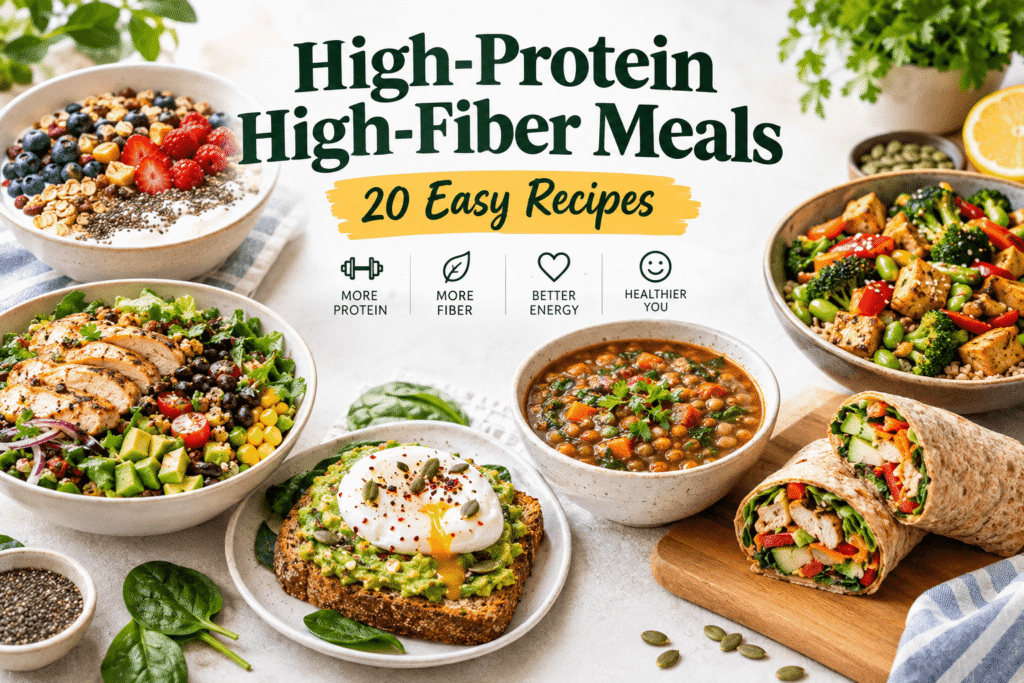
Finding meals that are both satisfying and easy to prepare can be challenging when you’re busy. High-Protein High-Fiber Meals offer a practical way to combine protein-rich foods such as eggs, chicken, Greek yogurt, tofu, beans, lentils, and fish with fiber-rich ingredients like vegetables, fruit, oats, whole grains, and legumes.
Protein and fiber play different nutritional roles, but together they can make meals more substantial. Research has found that higher-protein meals can increase feelings of fullness, while the effects of dietary fiber on appetite can vary depending on the type and food source.
The good news is that you don’t need complicated recipes or expensive ingredients. Below are 20 simple meal ideas you can adapt for breakfast, lunch, dinner, or meal prep.
Table of Contents
- Why Protein and Fiber Matter
- How to Build a High-Protein High-Fiber Meal
- 20 Easy High-Protein High-Fiber Meals
- Meal Prep Tips
- Common Mistakes to Avoid
- Practical Checklist
- FAQ
- Conclusion
Why High-Protein High-Fiber Meals Matter
A balanced meal does more than provide calories. It can also provide protein, fiber, vitamins, minerals, healthy fats, and other nutrients.
Current U.S. dietary guidance emphasizes whole, nutrient-dense foods, including protein foods, vegetables, fruits, dairy, healthy fats, and whole grains.
Protein Supports Satisfying Meals
Protein can come from both animal and plant foods. Good choices include:
- Eggs
- Chicken
- Turkey
- Fish
- Greek yogurt
- Cottage cheese
- Tofu
- Tempeh
- Lentils
- Chickpeas
- Black beans
Higher-protein meals have been associated with greater feelings of fullness in several studies, although individual needs and responses differ.
Fiber Adds Variety and Nutritional Value
Fiber-rich foods include:
- Beans and lentils
- Oats
- Whole grains
- Berries
- Apples
- Pears
- Broccoli
- Brussels sprouts
- Chia seeds
- Flaxseed
- Avocado
A recent systematic review also found that cereal fiber, particularly from foods such as oats and rye, can have favorable effects on measures of satiety, although effects on actual food intake are more limited.
How to Build High-Protein High-Fiber Meals
You don’t need to calculate every nutrient to create a balanced plate.
Start With a Protein Source
Choose one main protein:
Chicken + beans + vegetables
Tofu + lentils + brown rice
Eggs + whole-grain toast + avocado
Greek yogurt + oats + berries
Add a Fiber-Rich Ingredient
Legumes are particularly useful because they can provide both protein and fiber. Recent research describes pulses such as beans, lentils, peas, and chickpeas as important sources of plant protein and dietary fiber.
Finish With Vegetables, Fruit, or Whole Grains
Colorful produce can make meals more appealing while whole grains can add texture and fiber.
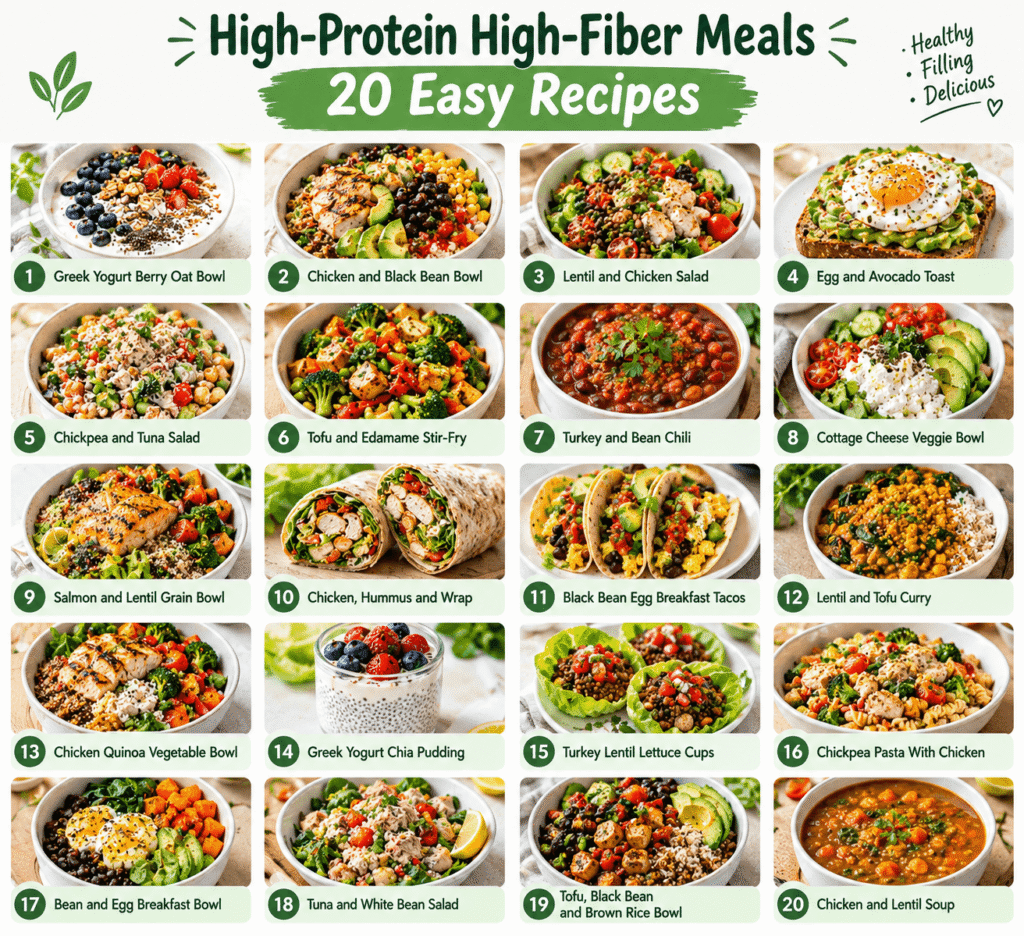
20 High-Protein High-Fiber Meals for Easy Eating
These recipes are designed to be flexible. Adjust portions, seasonings, vegetables, and ingredients according to your preferences and dietary needs.
1. Greek Yogurt Berry Oat Bowl
Combine plain Greek yogurt with rolled oats, berries, chia seeds, and chopped walnuts.
The yogurt provides protein, while oats, berries, and chia seeds contribute fiber and texture.
Easy tip: Prepare it the night before for a quick breakfast.
2. Chicken and Black Bean Bowl
Build a bowl with grilled chicken, black beans, brown rice, tomatoes, lettuce, corn, and avocado.
Add lime juice, salsa, or a simple yogurt-based dressing for extra flavor.
3. Lentil and Chicken Salad
Mix cooked lentils with sliced chicken breast, cucumber, tomatoes, spinach, and red onion.
Use lemon juice, olive oil, herbs, and black pepper for a simple dressing.
This works especially well as a packed lunch.
4. High-Protein Egg and Avocado Toast
Top whole-grain toast with mashed avocado and boiled or poached eggs.
Add tomatoes, spinach, pumpkin seeds, or chili flakes.
For extra fiber, choose a whole-grain bread with seeds or oats.
5. Chickpea and Tuna Salad
Combine canned tuna with chickpeas, cucumber, tomatoes, parsley, and lemon.
A spoonful of Greek yogurt can replace some of the mayonnaise traditionally used in tuna salad.
Serve it over greens or inside a whole-grain wrap.
6. Tofu and Edamame Stir-Fry
Cook firm tofu with edamame, broccoli, bell peppers, mushrooms, and carrots.
Serve with brown rice or another whole grain.
For a quick sauce, combine low-sodium soy sauce, garlic, ginger, and a small amount of sesame oil.
7. Turkey and Bean Chili
Brown lean ground turkey and simmer it with kidney beans, black beans, tomatoes, onions, peppers, and spices.
Chili is excellent for batch cooking because the flavors often develop after sitting overnight.
Freeze individual portions for busy evenings.
8. Cottage Cheese Veggie Bowl
Add cottage cheese to a bowl with cucumber, tomatoes, carrots, avocado, pumpkin seeds, and whole-grain crackers.
This is a fast option when you don’t want to cook.
For extra flavor, add herbs, black pepper, or everything-bagel seasoning.
9. Salmon and Lentil Grain Bowl
Combine cooked salmon with lentils, quinoa, spinach, cucumber, and roasted vegetables.
Finish with lemon and fresh herbs.
This combination gives you protein from salmon and lentils while the vegetables and whole grains add additional fiber.
10. Chicken, Hummus, and Whole-Grain Wrap
Spread hummus over a whole-grain tortilla.
Add sliced chicken, spinach, shredded carrots, cucumber, and bell peppers.
Roll tightly and cut into two portions for an easy packed lunch.
11. Black Bean Egg Breakfast Tacos
Fill whole-grain or corn tortillas with scrambled eggs, black beans, tomatoes, avocado, and spinach.
Add salsa for a fresh, spicy finish.
These tacos can also become a convenient weekend meal-prep option.
12. Lentil and Tofu Curry
Simmer lentils and tofu with tomatoes, spinach, onions, garlic, and curry spices.
Serve with brown rice or a small portion of whole-grain flatbread.
This is a particularly useful plant-based meal when you want something warm and filling.
13. Chicken Quinoa Vegetable Bowl
Combine grilled chicken with cooked quinoa, broccoli, roasted peppers, cucumber, and leafy greens.
Drizzle with lemon-tahini dressing.
For meal prep, keep the dressing separate until you’re ready to eat.
14. Greek Yogurt Chia Pudding
Mix Greek yogurt, chia seeds, milk, cinnamon, and berries.
Refrigerate overnight.
In the morning, add chopped nuts or fruit.
This recipe requires almost no cooking and works well for breakfast or an afternoon snack.
15. Turkey Lentil Lettuce Cups
Cook lean ground turkey with lentils, onions, carrots, and mild spices.
Spoon the mixture into lettuce leaves and top with diced tomatoes and Greek yogurt.
For a higher-energy meal, serve alongside brown rice or a whole-grain side.
16. Chickpea Pasta With Chicken and Vegetables
Cook chickpea pasta and toss it with grilled chicken, spinach, tomatoes, broccoli, and a light tomato sauce.
Chickpea pasta can help increase the protein and fiber content of a familiar pasta-style meal.
17. Bean and Egg Breakfast Bowl
Layer black beans, scrambled eggs, spinach, tomatoes, avocado, and roasted sweet potato.
This is a colorful breakfast that can easily become lunch.
Prepare the sweet potato and beans ahead of time to make weekday assembly faster.
18. Tuna and White Bean Salad
Combine tuna, white beans, cucumber, tomatoes, parsley, red onion, and lemon juice.
Serve over mixed greens or alongside whole-grain toast.
Beans add plant protein and fiber while tuna provides a convenient protein source.
19. Tofu, Black Bean, and Brown Rice Bowl
Combine crispy baked tofu with black beans, brown rice, cabbage, corn, tomatoes, and avocado.
Add salsa or a lime dressing.
This plant-forward bowl is easy to customize with seasonal vegetables.
20. Chicken and Lentil Soup
Simmer shredded chicken with lentils, carrots, celery, tomatoes, onions, and herbs.
Make a large batch and portion it into containers.
It’s an easy freezer-friendly meal for colder days or busy workweeks.
Benefits of Protein-Rich and High-Fiber Meals
Meals Can Feel More Substantial
Protein has been studied for its relationship with satiety, while some fiber-rich foods can contribute to fullness depending on their type and structure.
It Encourages More Whole Foods
Many high-protein, high-fiber combinations naturally include beans, lentils, vegetables, whole grains, fruit, nuts, seeds, or dairy.
It Makes Meal Prep Easier
You can prepare several components at once:
- Cooked chicken
- Lentils
- Beans
- Brown rice
- Quinoa
- Roasted vegetables
- Boiled eggs
- Chopped salad vegetables
Then mix and match them throughout the week.
Best Practices for High-Protein High-Fiber Meal Prep
Choose Two or Three Proteins
Prepare chicken, eggs, tofu, or lentils at the beginning of the week.
Prepare Fiber-Rich Ingredients
Cook beans, lentils, quinoa, brown rice, or roasted vegetables in larger batches.
Keep Sauces Separate
Store dressings and sauces separately so salads and grain bowls remain fresh.
Use Flexible Ingredients
Choose ingredients that work across several meals.
For example, roasted broccoli can go into:
- Chicken bowls
- Egg breakfasts
- Tofu stir-fries
- Grain salads
- Wraps
Common Mistakes With High-Protein High-Fiber Meals
Mistake 1: Focusing Only on Protein
A high-protein meal isn’t automatically balanced. Include vegetables, fruit, whole grains, or legumes where appropriate.
Mistake 2: Increasing Fiber Too Quickly
If your current diet is low in fiber, increase fiber-rich foods gradually and drink enough fluids.
Mistake 3: Making Every Meal Complicated
Healthy eating becomes easier when meals use simple combinations rather than dozens of ingredients.
Mistake 4: Forgetting Flavor
Use herbs, spices, citrus, garlic, salsa, yogurt sauces, and homemade dressings to keep healthy meals enjoyable.
Mistake 5: Ignoring Individual Needs
People with certain medical conditions, food allergies, digestive issues, or kidney disease may need individualized nutrition advice. A registered dietitian or qualified healthcare professional can help tailor dietary choices.
High-Protein High-Fiber Meal Prep Checklist
Before preparing a meal, ask:
- Do I have a protein source?
- Did I include a fiber-rich food?
- Can I add a vegetable or fruit?
- Would a whole grain or legume improve the meal?
- Can I prepare part of this meal ahead?
- Is the recipe flavorful enough to enjoy?
- Can I store leftovers safely for another meal?
If you can answer yes to most of these questions, you’re on the right track.
Make Healthy Eating Easier With Fit Food Journey
Healthy eating doesn’t have to mean preparing complicated meals every day.
Start with a few reliable ingredients, prepare them in batches, and combine protein-rich foods with vegetables, legumes, whole grains, fruit, nuts, and seeds.
Whether you’re planning work lunches, family dinners, quick breakfasts, or weekend meal prep, these High-Protein High-Fiber Meals can give you a practical starting point.
Ready to make healthy eating simpler? Explore more healthy recipes and meal ideas on Fit Food Journey and build a routine that works for your lifestyle.
Frequently Asked Questions About High-Protein High-Fiber Meals
1. What Are High-Protein High-Fiber Meals?
High-protein high-fiber meals combine protein-rich foods such as eggs, chicken, fish, Greek yogurt, tofu, beans, or lentils with fiber-rich foods such as vegetables, fruits, whole grains, seeds, and legumes.
2. What Foods Are High in Protein and Fiber?
Beans, lentils, chickpeas, peas, and some soy foods can provide both protein and fiber. Combining these foods with vegetables or whole grains can create a balanced meal.
3. Are High-Protein High-Fiber Meals Good for Meal Prep?
Yes. Many of these meals are suitable for meal prep because ingredients such as chicken, lentils, beans, quinoa, brown rice, eggs, and roasted vegetables can be prepared in advance.
4. What Is an Easy High-Protein High-Fiber Breakfast?
A Greek yogurt bowl with oats, berries, chia seeds, and nuts is an easy option. Another choice is eggs with black beans, avocado, vegetables, and whole-grain toast.
5. Can You Make High-Protein High-Fiber Meals Without Meat?
Absolutely. Lentils, chickpeas, black beans, tofu, tempeh, edamame, Greek yogurt, cottage cheese, eggs, nuts, seeds, and whole grains provide many options for vegetarian meals.
Conclusion: High-Protein High-Fiber Meals Made Easy
Creating satisfying meals doesn’t have to be complicated. The easiest approach is to combine a reliable protein source with fiber-rich plant foods, whole grains, vegetables, fruit, or legumes.
These High-Protein High-Fiber Meals give you 20 flexible ideas for breakfast, lunch, dinner, and meal prep. Start with two or three recipes you enjoy, prepare a few ingredients ahead, and gradually build a collection of healthy meals that fit your routine.
For more practical meal ideas, continue exploring Fit Food Journey for high-protein recipes, fiber-rich meals, healthy meal prep inspiration, and simple ways to make everyday eating easier.