
Introduction
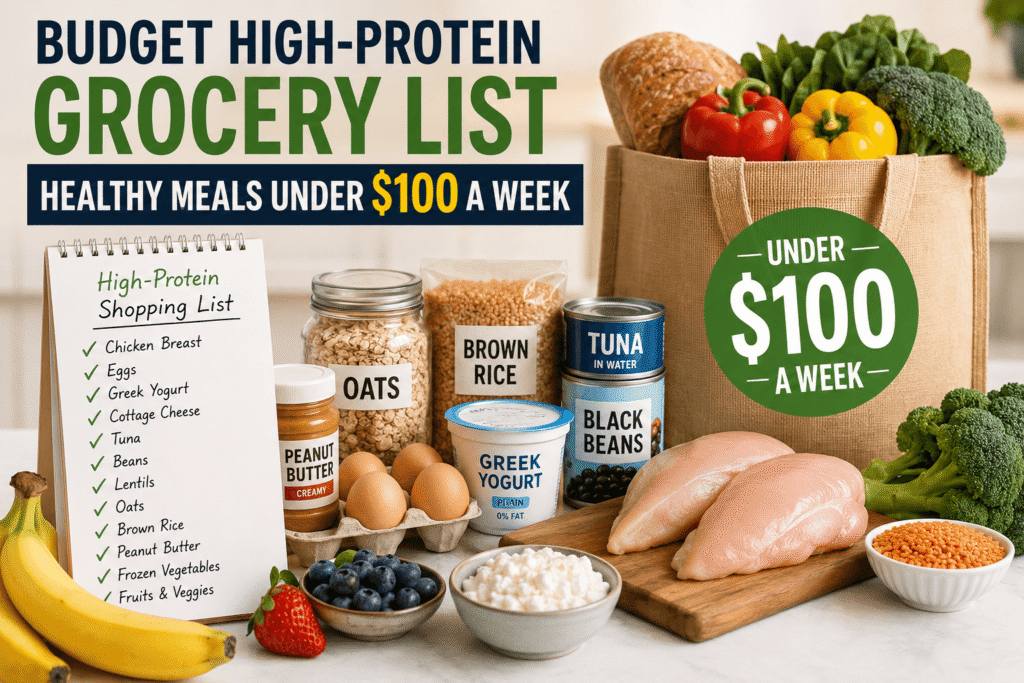
Creating a Budget High-Protein Grocery List doesn’t mean sacrificing nutrition, taste, or variety. With rising food prices across the USA, Canada, Europe, and the UK, many households are searching for practical ways to eat healthy while staying within a weekly grocery budget. Fortunately, with smart planning and affordable protein choices, it’s possible to prepare satisfying meals for under $100 per week.
Protein plays an essential role in muscle maintenance, energy production, immune function, and keeping you full between meals. By choosing cost-effective ingredients, shopping strategically, and preparing meals at home, you can enjoy nutritious breakfasts, lunches, dinners, and snacks without overspending.
Whether you’re feeding a family, meal-prepping for work, or simply looking to cut grocery costs, this guide will help you build a balanced shopping list that maximizes both nutrition and value.
Table of Contents
- Why a Budget High-Protein Grocery List Matters
- Essential Budget-Friendly Protein Foods
- Smart Grocery Shopping Strategies
- Sample Grocery List Under $100
Why a Budget High-Protein Grocery List Matters
Many people believe eating a high-protein diet is expensive because foods like premium steaks, seafood, and protein supplements often come with high price tags. However, the truth is that numerous affordable protein sources offer excellent nutrition at a fraction of the cost.
A carefully planned grocery list helps you:
- Reduce food waste
- Avoid impulse purchases
- Meet daily protein goals
- Save money every week
- Prepare healthier meals at home
- Spend less on takeout and convenience foods
Planning before you shop also makes it easier to stick to your budget while ensuring every meal contains quality protein, healthy carbohydrates, and beneficial fats.
Essential Foods for a Budget High-Protein Grocery List
The foundation of a successful Budget High-Protein Grocery List is selecting ingredients that provide the most nutrition for the lowest cost.
Eggs
Eggs remain one of the most affordable complete protein sources available.
Benefits include:
- Around 6 grams of protein per egg
- Rich in vitamins B12 and D
- Extremely versatile
- Ideal for breakfast, lunch, or dinner
Hard-boiled eggs also make excellent portable snacks.
Chicken Breast or Chicken Thighs
Buying family packs or frozen chicken often reduces the cost significantly.
Chicken provides:
- Lean protein
- Iron
- B vitamins
- Easy meal prep options
Cook several portions at once for salads, wraps, rice bowls, and pasta dishes throughout the week.
Canned Tuna and Salmon
Shelf-stable fish is an affordable way to increase protein intake while adding healthy omega-3 fats.
Use canned fish in:
- Sandwiches
- Salads
- Pasta
- Rice bowls
- Stuffed potatoes
Greek Yogurt
Plain Greek yogurt delivers high protein while being lower in sugar than flavored varieties.
It works well for:
- Breakfast bowls
- Smoothies
- Healthy desserts
- Salad dressings
- Snack cups
Choose larger containers instead of individual servings to reduce costs.
Cottage Cheese
Cottage cheese has become increasingly popular because it is:
- High in protein
- Budget-friendly
- Low in calories
- Easy to pair with fruits or vegetables
It’s also excellent for meal prep.
Dry Beans and Lentils
Beans and lentils offer one of the lowest costs per serving of protein available.
Popular options include:
- Black beans
- Kidney beans
- Chickpeas
- Green lentils
- Red lentils
These ingredients also provide:
- Fiber
- Iron
- Magnesium
- Potassium
Buying dried beans instead of canned versions can further reduce grocery expenses.
Frozen Vegetables
Frozen vegetables are often less expensive than fresh produce while maintaining excellent nutritional value.
They also:
- Last longer
- Reduce waste
- Cook quickly
- Work well in meal prep
Choose mixed vegetables, broccoli, spinach, peas, or cauliflower.
Brown Rice and Oats
Affordable carbohydrates help stretch protein-rich meals further while providing sustained energy.
Brown rice pairs perfectly with:
- Chicken
- Beans
- Tuna
- Eggs
Oats create filling breakfasts and can even be added to smoothies for extra nutrition.
Smart Grocery Shopping Strategies
Buying the right foods is only half the equation. Smart shopping habits can significantly reduce your grocery bill while helping you maintain a healthy diet.
Plan Your Meals Before Shopping
Create a weekly menu based on ingredients that can be used across multiple recipes.
For example:
- Chicken for tacos
- Chicken salad
- Stir-fry
- Rice bowls
- Soup
Using the same ingredients in different ways minimizes food waste and keeps meals interesting.
Buy Store Brands
Many store-brand products offer the same nutritional quality as name brands but at a lower price.
Common savings include:
- Greek yogurt
- Frozen vegetables
- Rice
- Oats
- Canned beans
Compare nutrition labels instead of relying solely on branding
Shop Seasonal Produce
Seasonal fruits and vegetables are typically fresher, more affordable, and readily available.
When prices are high, frozen options are an excellent alternative that still provide valuable nutrients.
Purchase in Bulk When Practical
Staple foods such as oats, rice, dried beans, lentils, and frozen chicken can often be purchased in larger quantities for a lower price per serving.
Bulk buying works best for foods with a long shelf life that you’ll use regularly.
Sample Budget High-Protein Grocery List (Under $100)
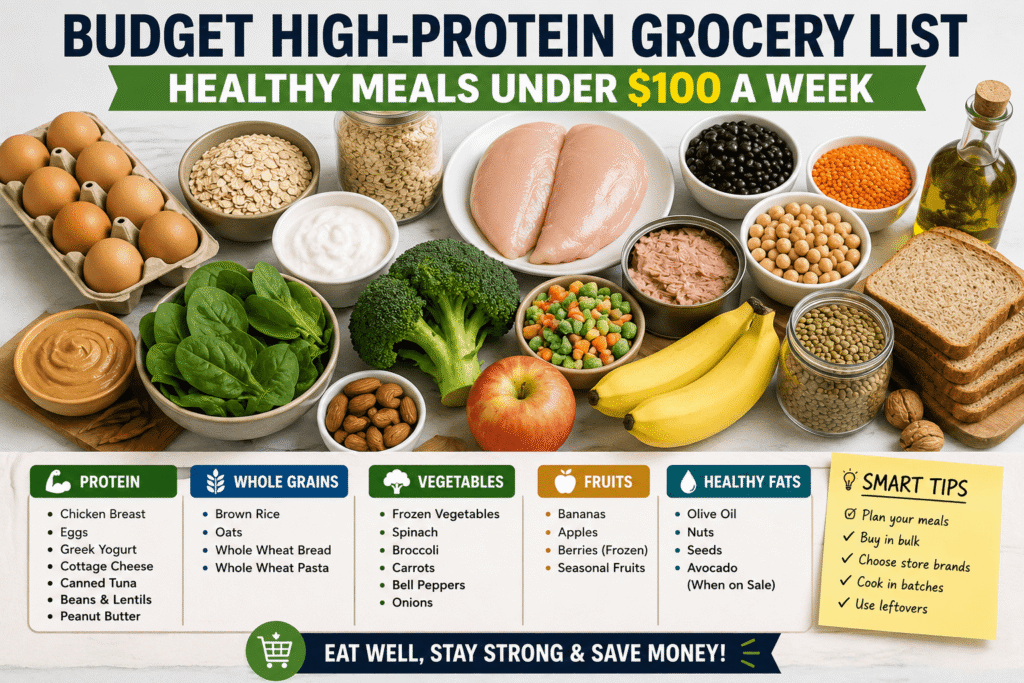
Here’s an example of a weekly shopping list designed to provide balanced, protein-rich meals while staying close to a $100 budget (prices vary by location and store).
Item Estimated Cost
Eggs (18-pack) $6
Chicken Breast $18
Greek Yogurt $6
Cottage Cheese $4
Canned Tuna (4 cans) $8
Dry Lentils $3
Black Beans $3
Brown Rice $5
Old-Fashioned Oats $5
Frozen Mixed Vegetables $8
Frozen Broccoli $4
Bananas $3
Apples $5
Peanut Butter $4
Whole Wheat Bread $4
Olive Oil $8
Spices & Seasonings $6
Benefits of Following a Budget High-Protein Grocery List
A well-planned Budget High-Protein Grocery List does more than save money—it helps you build healthier eating habits that are sustainable over time. By focusing on affordable, nutrient-dense foods, you can support your health goals without exceeding your grocery budget.
Helps You Stay Full Longer
Protein digests more slowly than refined carbohydrates, which helps increase satiety. Meals that include lean protein can reduce unnecessary snacking and make it easier to manage portion sizes throughout the day.
Supports Muscle Health
Whether you’re active, trying to lose weight, or simply maintaining a healthy lifestyle, protein is essential for repairing and preserving muscle tissue. Pairing protein with regular exercise can help improve strength and recovery.
Makes Meal Prep Easier
Shopping with a plan allows you to prepare several meals at once, saving both time and money. Cooking in batches also reduces the temptation to order takeout on busy evenings.
Reduces Food Waste
Buying ingredients that work across multiple recipes ensures that more of your groceries get used before they spoil. This simple habit can save hundreds of dollars over the course of a year.
Step-by-Step Guide to Building a Budget High-Protein Grocery List
Creating a balanced grocery list is easier when you follow a simple process.
Step 1: Set Your Weekly Budget
Decide how much you can realistically spend. In this guide, the target is under $100 per week, but the same principles apply regardless of your budget.
Step 2: Choose Affordable Protein Sources
Aim for a mix of animal- and plant-based proteins, such as:
- Eggs
- Chicken
- Greek yogurt
- Cottage cheese
- Canned tuna
- Beans
- Lentils
- Peanut butter
- Tofu
Step 3: Add Healthy Carbohydrates
Include whole-grain options that provide lasting energy.
Examples include:
- Brown rice
- Oats
- Whole wheat bread
- Sweet potatoes
- Whole wheat pasta
Step 4: Include Plenty of Vegetables
Fill your cart with budget-friendly vegetables such as:
- Frozen broccoli
- Mixed vegetables
- Spinach
- Carrots
- Bell peppers
- Cabbage
Frozen vegetables often provide excellent value and reduce food waste.
Step 5: Don’t Forget Healthy Fats
Healthy fats improve flavor and help keep meals satisfying.
Good choices include:
- Olive oil
- Peanut butter
- Nuts
- Seeds
- Avocados (when on sale)
Step 6: Plan Meals Around Shared Ingredients
For example:
Breakfast
- Greek yogurt with oats and bananas
Lunch
- Chicken, brown rice, and broccoli
Dinner
- Lentil chili with vegetables
Snack
- Cottage cheese with apple slices
Reusing ingredients across meals keeps shopping simple and affordable.
Common Budget High-Protein Grocery List Mistakes to Avoid
Even with a solid grocery list, a few common habits can increase your spending.
Buying Too Many Convenience Foods
Pre-cut vegetables, ready-made meals, and individually packaged snacks are convenient but often cost significantly more than preparing food yourself.
Shopping Without a List
Impulse purchases can quickly push your grocery bill over budget. Always shop with a written list and stick to it whenever possible.
Ignoring Unit Prices
The cheapest-looking product isn’t always the best value. Compare the price per ounce or kilogram to identify the most cost-effective option.
Throwing Away Leftovers
Leftover chicken, rice, and vegetables can easily become wraps, salads, soups, or stir-fries the next day.
Skipping Sales and Store Promotions
Take advantage of weekly discounts on staple foods and stock up on non-perishable items when prices are lower.
Practical Weekly Grocery Checklist
Use this checklist before heading to the store.
Protein
- ✔ Eggs
- ✔ Chicken breast or thighs
- ✔ Greek yogurt
- ✔ Cottage cheese
- ✔ Canned tuna
- ✔ Lentils
- ✔ Beans
Whole Grains
- ✔ Brown rice
- ✔ Oats
- ✔ Whole wheat bread
- ✔ Whole wheat pasta
Fruits
- ✔ Bananas
- ✔ Apples
- ✔ Seasonal berries (if on sale)
Vegetables
- ✔ Frozen broccoli
- ✔ Frozen mixed vegetables
- ✔ Spinach
- ✔ Carrots
- ✔ Onions
Healthy Fats
- ✔ Olive oil
- ✔ Peanut butter
- ✔ Mixed nuts
Pantry Staples
- ✔ Garlic
- ✔ Black pepper
- ✔ Paprika
- ✔ Italian seasoning
- ✔ Low-sodium broth
Start Saving Money While Eating Better
Healthy eating doesn’t have to be expensive. A thoughtful Budget High-Protein Grocery List helps you enjoy balanced meals, reduce grocery waste, and stay within your weekly spending limit.
If you’re looking for more practical nutrition advice, meal-prep inspiration, and budget-friendly recipes, explore the latest guides on Fit Food Journey. You’ll find simple strategies that make healthy eating easier, whether you’re shopping for yourself or your entire family.
Budget High-Protein Grocery List FAQs
Can I eat a high-protein diet for under $100 per week?
Yes. By choosing affordable proteins like eggs, beans, lentils, chicken, canned tuna, and Greek yogurt, you can prepare nutritious meals while staying within a $100 weekly grocery budget.
What is the cheapest source of protein?
Beans, lentils, eggs, peanut butter, canned tuna, and cottage cheese are among the most affordable protein-rich foods available.
Is frozen food healthy?
Yes. Frozen vegetables and fruits are typically frozen shortly after harvest, helping them retain nutrients while lasting longer than many fresh options.
How much protein should I eat daily?
Protein needs vary depending on age, activity level, and health goals. General guidance suggests around 0.8 grams of protein per kilogram of body weight for most healthy adults, while active individuals may require more.
How can I reduce grocery costs even further?
Plan meals in advance, shop with a list, buy store brands, purchase pantry staples in bulk, compare unit prices, and use leftovers creatively to minimize waste.
Conclusion: Build Your Budget High-Protein Grocery List Today
Building a Budget High-Protein Grocery List is one of the easiest ways to eat healthier while keeping your grocery bill under control. By selecting affordable protein sources, planning meals ahead of time, and making smart shopping decisions, you can prepare delicious breakfasts, lunches, dinners, and snacks for under $100 per week.
Remember, healthy eating isn’t about buying the most expensive ingredients—it’s about making thoughtful choices that fit your lifestyle and your budget. With a little planning, you’ll enjoy nutritious, protein-packed meals that support your health goals and save money every week.