
Introduction
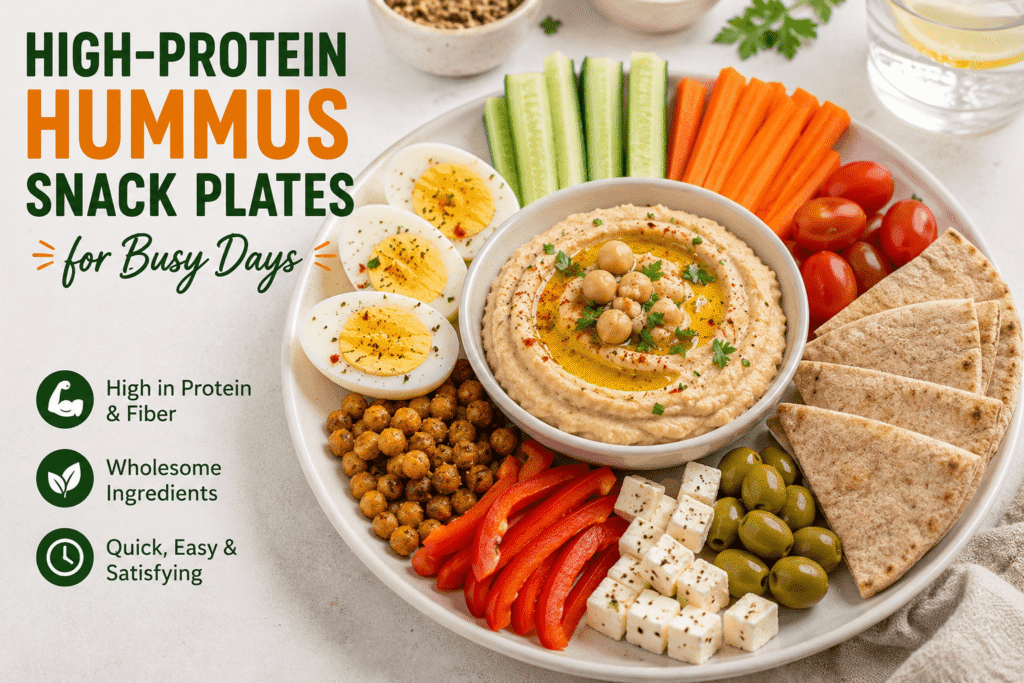
High-protein hummus snack plates are an easy way to turn a simple dip into a satisfying mini-meal. Instead of reaching for cookies, crisps, or another quick snack that leaves you hungry soon after, you can combine creamy hummus with vegetables, whole grains, eggs, yogurt, cheese, or other protein-rich foods.
Hummus already provides plant-based protein and fiber because it is traditionally made with chickpeas. Harvard’s Nutrition Source notes that chickpeas provide protein, fiber, folate, iron, and other nutrients.
The best part? You do not need a complicated recipe. With a few ingredients in your refrigerator, you can build a balanced snack plate in about five minutes.
Table of Contents
- Why Hummus Snack Plates Work
- What Makes a Hummus Snack Plate High in Protein?
- High-Protein Hummus Snack Plates: 10 Easy Combinations
- How to Build a Balanced Snack Plate
- Benefits of Protein-Rich Hummus Snacks
- Common Mistakes to Avoid
- Busy-Day Snack Plate Checklist
- Internal and External Link Placement
- Easy Meal Prep Tips
- FAQ
- Conclusion
Why High-Protein Hummus Snack Plates Are Perfect for Busy Days
Busy schedules often make healthy eating feel harder than it needs to be. You may have meetings, school runs, commuting, workouts, or errands that leave little time for cooking.
That is where a snack plate can help.
A good snack plate combines different textures and nutrients in one convenient serving. Hummus supplies a creamy base, while vegetables add crunch and whole grains provide carbohydrates.
Adding another protein source can make the plate even more filling.
Harvard’s Nutrition Source recommends thinking about what will genuinely satisfy hunger when choosing snacks and highlights options such as vegetables, whole grains, nuts, yogurt, hummus, and roasted chickpeas.
Why chickpeas are a smart base
Chickpeas are legumes that naturally contain protein and both soluble and insoluble fiber. They can also contribute iron, folate, phosphorus, and beneficial unsaturated fats to the diet.
That makes hummus a useful starting point for a snack plate.
What Are High-Protein Hummus Snack Plates?
Not every hummus plate is automatically high in protein.
A plate containing hummus, cucumber, and a few crackers can be nutritious, but it may not provide as much protein as you want from a substantial snack.
The easiest solution is to layer protein sources.
Try combining hummus with:
- Hard-boiled eggs
- Greek yogurt
- Cottage cheese
- Edamame
- Roasted chickpeas
- Tuna
- Grilled chicken
- Turkey slices
- Tofu
- Pumpkin seeds
- Hemp seeds
- Cheese
The exact protein content will depend on portion sizes and the products you choose, so check nutrition labels when protein intake is a specific goal.
The American Heart Association also identifies legumes, chickpeas, lentils, nuts, and other plant foods as useful sources of protein and fiber.
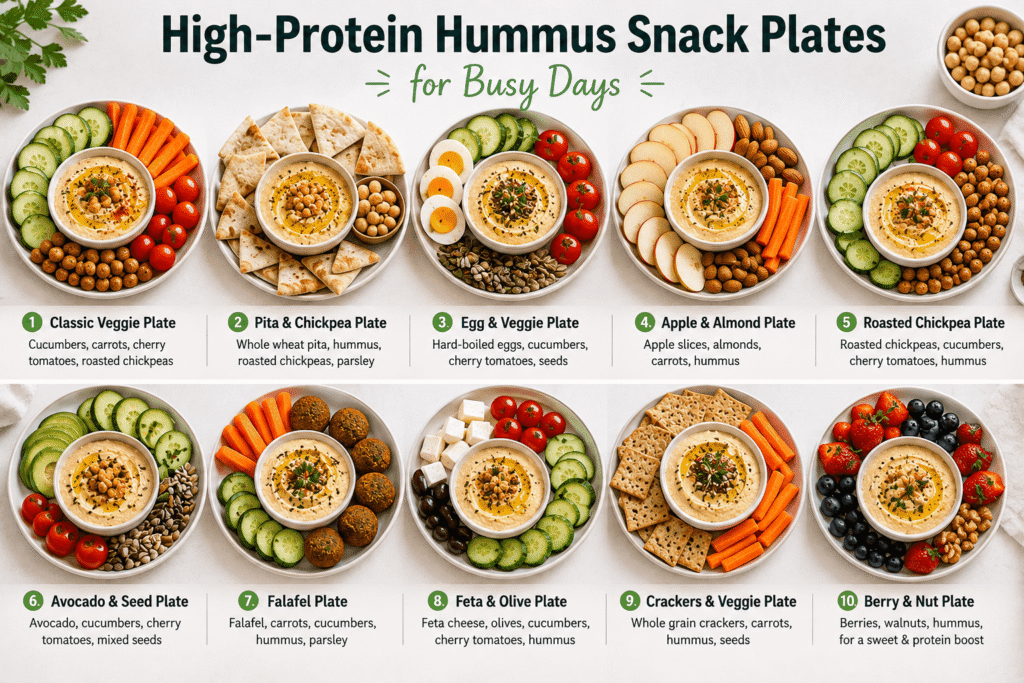
High-Protein Hummus Snack Plates: 10 Easy Combinations
The beauty of high-protein hummus snack plates is that you can change the ingredients based on your preferences, budget, and what is already in your kitchen.
1. Hummus, Egg and Veggie Plate
Start with a scoop of hummus and add two hard-boiled eggs.
Fill the remaining space with:
- Cucumber
- Cherry tomatoes
- Bell peppers
- Carrot sticks
- Whole-grain crackers
This combination works especially well for an afternoon snack when you need something more substantial.
2. Greek Yogurt Dip for Creamy Protein
Add plain Greek yogurt alongside hummus for an extra creamy protein source.
Serve with:
Cucumber
Radishes
Whole-grain pita
Olives
Fresh herbs
For extra flavor, season the yogurt with lemon juice, black pepper, garlic, or dill.
3. Chicken Hummus Snack Plate
Use leftover grilled chicken to create a more filling snack.
Add sliced chicken breast, hummus, cucumber, tomatoes, and whole-grain pita.
This is particularly useful when you need a quick lunch rather than a small snack.
4. Mediterranean Hummus Plate
For a Mediterranean-inspired option, combine:
- Hummus
- Feta cheese
- Cucumber
- Tomatoes
- Olives
- Whole-grain pita
- Roasted chickpeas
The combination gives you creamy, crunchy, salty, and fresh flavors without requiring much preparation.
5. Cottage Cheese and Hummus Plate
Cottage cheese is an easy way to increase the protein content of your plate.
Pair it with hummus, sliced peppers, cucumbers, whole-grain crackers, and a few pumpkin seeds.
This option is especially convenient for people who prefer mild flavors.
6. Tuna and Hummus Plate
For a savory, protein-rich plate, add a small serving of tuna.
Combine it with hummus, cucumber, tomatoes, carrots, and whole-grain crackers.
Choose canned tuna packed according to your dietary preferences and check the label for sodium.
7. Edamame for Plant-Based Protein
For a plant-forward snack, combine hummus with cooked edamame.
Add:
- Carrot sticks
- Bell peppers
- Snap peas
- Whole-grain crackers
- Sesame seeds
This option provides protein from multiple plant sources.
8. Turkey Slices for a Lean Protein Boost
Add sliced turkey to hummus, vegetables, and whole-grain pita.
For a fresher version, roll cucumber strips and turkey together or use lettuce leaves as wraps.
If choosing packaged deli meat, compare labels for sodium and ingredients.
9. Roasted Chickpeas for Extra Protein and Fiber
Want more texture?
Add roasted chickpeas to hummus with fresh vegetables and whole-grain crackers.
Chickpeas can be seasoned with paprika, cumin, garlic, or black pepper before roasting.
Harvard notes that chickpeas can be roasted for a crunchy snack and also used to make hummus.
10. Hummus, Cheese and Seed Plate
For an extremely simple option, combine:
- Hummus
- Cheese cubes
- Pumpkin seeds
- Cucumber
- Apple slices
- Whole-grain crackers
The sweet-and-savory contrast makes this a good option when you want variety without cooking.
How to Build a High-Protein Hummus Snack Plate
You do not need a strict recipe to make a good snack plate.
Instead, use this simple formula:
Step 1: Choose a High-Protein Hummus Base
Start with approximately ¼ to ⅓ cup of hummus, depending on your appetite and the rest of the plate.
Traditional hummus commonly combines chickpeas, tahini, lemon, garlic, and seasonings.
Step 2: Add Protein-Rich Foods to Your Snack Plate
Choose one:
- Eggs
- Greek yogurt
- Cottage cheese
- Chicken
- Tuna
- Turkey
- Edamame
- Tofu
- Seeds
Step 3: Add colorful vegetables
Aim for two or three choices.
Good options include:
- Carrots
- Cucumber
- Bell peppers
- Cherry tomatoes
- Radishes
- Sugar snap peas
- Broccoli
Step 4: Add a whole-grain carbohydrate
Try:
- Whole-grain pita
- Whole-grain crackers
- Rye crispbread
- Whole-grain toast
Step 5: Add flavor
Finish with lemon, herbs, spices, olives, or a small amount of your favorite sauce.
Benefits of Protein-Rich Hummus Snacks
Protein can make snacks more satisfying
Pairing protein with fiber-rich foods can make a snack feel more substantial.
Instead of eating a small food that leaves you searching for another snack shortly afterward, a balanced plate can help bridge the gap between meals.
Hummus adds plant-based nutrition
Because hummus is made primarily from chickpeas, it can contribute plant protein and fiber to the diet. The American Heart Association recommends beans and other legumes as part of a healthy eating pattern.
They are highly customizable
You can make these plates vegetarian, vegan, Mediterranean-inspired, gluten-free, or higher in animal-based protein depending on your dietary needs.
They require very little cooking
Most ingredients can be washed, sliced, opened, or assembled.
That makes them useful for:
- Office workers
- Students
- Parents
- Travelers
- Home workers
- Post-workout snackers
Common Mistakes to Avoid
Mistake 1: Using only hummus and crackers
This can create a snack that is heavier on carbohydrates without enough variety.
Better approach: Add vegetables and a dedicated protein source.
Mistake 2: Ignoring portions
Healthy foods still contribute calories. Build a portion that matches your hunger and whether the plate is a snack or a small meal.
Mistake 3: Choosing every high-sodium ingredient
Olives, cheese, deli meats, crackers, and packaged hummus can all contribute sodium.
Compare nutrition labels when needed.
Mistake 4: Forgetting vegetables
Hummus becomes much more useful as part of a balanced plate when paired with colorful vegetables.
Mistake 5: Making it too complicated
You do not need 12 ingredients.
Three or four well-chosen foods can make an excellent snack.
Busy-Day High-Protein Snack Plate Checklist
Use this quick checklist when assembling your plate:
- ☐ Hummus
- ☐ One protein-rich food
- ☐ Two colorful vegetables
- ☐ One whole-grain option
- ☐ Optional fruit
- ☐ Optional seeds or nuts
- ☐ Lemon, herbs, or spices for flavor
- ☐ Water or another unsweetened drink
For meal-prep days, portion vegetables and protein ingredients into containers ahead of time. Keep hummus refrigerated until you’re ready to eat.
If you are packing food for work or travel, use an insulated lunch bag and appropriate cold storage for perishable foods.
Easy High-Protein Hummus Snack Plate Combinations
The fastest way to make these snacks convenient is to prepare the components separately.
Prep vegetables once
Wash and slice several servings of cucumbers, carrots, peppers, and other sturdy vegetables.
Keep protein ready
Cook eggs, portion Greek yogurt, prepare chicken, or keep ready-to-eat edamame available.
Use individual containers
Create grab-and-go combinations for work or school.
For example:
Container 1: Hummus + cucumber + carrots + whole-grain crackers
Container 2: Hummus + egg + peppers + pita
Container 3: Hummus + chicken + tomatoes + cucumber
Tips for Making Hummus Snack Plates More Filling
Healthy eating does not have to mean preparing a complicated meal every time you feel hungry.
With a container of hummus, a few vegetables, and one or two protein-rich foods, you can create a snack that is convenient, colorful, and satisfying.
If you enjoy practical healthy eating ideas, explore more recipes and meal-planning inspiration on Fit Food Journey.
Frequently Asked Questions About High-Protein Hummus Snack Plates
Are hummus snack plates high in protein?
Hummus provides plant-based protein, but the total protein content depends on the portion and ingredients. Adding eggs, Greek yogurt, cottage cheese, chicken, tuna, edamame, tofu, or seeds can create a higher-protein snack plate.
What should I add to hummus for more protein?
Good additions include hard-boiled eggs, Greek yogurt, cottage cheese, chicken, tuna, turkey, edamame, tofu, roasted chickpeas, and pumpkin seeds.
Are hummus and vegetables a healthy snack?
Hummus and vegetables can be a nutritious snack combination because hummus provides protein and fiber while vegetables add vitamins, minerals, water, and additional fiber.
Can I make hummus snack plates ahead of time?
Yes. You can prepare sliced vegetables, cooked eggs, cooked chicken, and other ingredients in advance. Keep hummus and perishable foods refrigerated and assemble the plate when you’re ready to eat.
What makes high-protein hummus snack plates filling?
Combining hummus with another protein source, vegetables, and a high-fiber or whole-grain food creates a more balanced snack. Protein and fiber can contribute to feelings of fullness and satisfaction.
Conclusion
High-protein hummus snack plates are a simple solution for busy days when you want something more satisfying than a packaged snack. Start with hummus, add a protein-rich ingredient, fill the plate with colorful vegetables, and finish with a whole-grain option.
You can keep the combinations simple or change them throughout the week with eggs, Greek yogurt, chicken, tuna, edamame, cheese, seeds, and roasted chickpeas.
The goal is not to create a perfect plate every time. It is to make nutritious choices easier, faster, and more enjoyable.
When healthy food is convenient, it becomes much easier to make it part of your everyday routine.