
Introduction
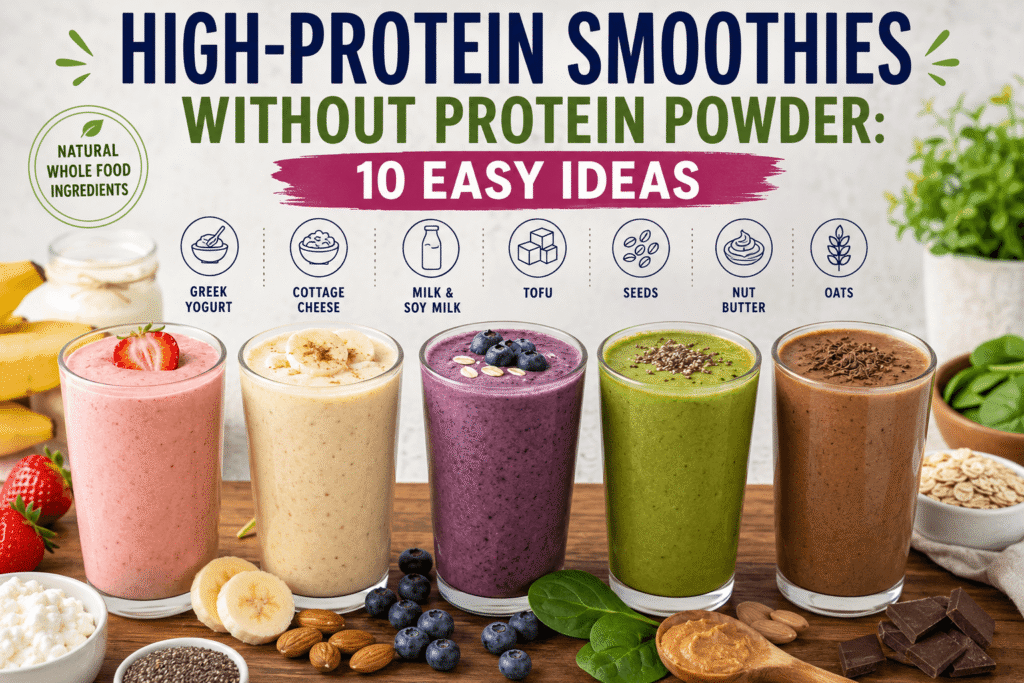
High-protein smoothies without protein powder are an easy way to build a satisfying breakfast, snack, or post-workout drink from everyday foods. You do not need a scoop of whey or plant protein to make a smoothie protein-rich. Ingredients such as Greek yogurt, cottage cheese, milk, soy milk, tofu, nut butter, chia seeds, and hemp seeds can do the job while also adding flavor and texture.
This approach is especially useful if you dislike the taste or texture of protein powders, prefer minimally processed ingredients, or simply want more variety in your smoothie routine.
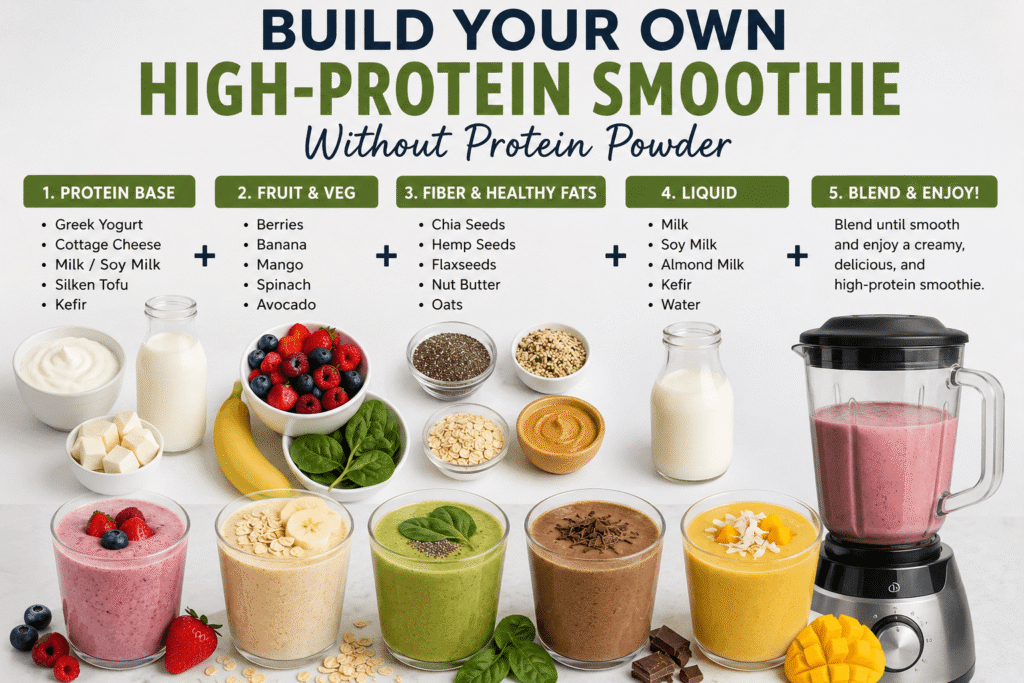
The key is to build your smoothie around a protein base, then add fruit, vegetables, fiber, and healthy fats for a more balanced drink.
Table of Contents
- Why Make Protein Smoothies Without Protein Powder?
- Best Whole-Food Protein Ingredients
- How to Build a High-Protein Smoothie
- 10 High-Protein Smoothie Ideas
- Tips for Better Texture and Flavor
- Common Mistakes to Avoid
- High-Protein Smoothie Checklist
- Internal and External Link Placement
- Try More Healthy Recipes
- FAQ
- Conclusion
Why Make High-Protein Smoothies Without Protein Powder?
Protein powder is convenient, but it is not essential.
Whole-food ingredients can provide protein alongside other nutrients. For example, dairy foods such as milk, yogurt, and cottage cheese can contribute protein, while seeds and nut butters can add protein, healthy fats, and texture.
Current U.S. dietary guidance includes protein foods from both animal and plant sources, including nuts, seeds, soy products, beans, peas, and lentils.
There are several practical reasons to choose a whole-food smoothie:
- Better ingredient flexibility: You control every ingredient.
- Creamier texture: Greek yogurt and cottage cheese can make smoothies thick and smooth.
- More variety: You can create fruit, chocolate, green, tropical, or coffee-inspired flavors.
- Easy substitutions: Dairy-free and vegetarian options are simple to make.
- Less reliance on supplements: You can use familiar foods already in your kitchen.
Protein also makes a smoothie more substantial. Instead of blending fruit and juice alone, adding a protein-rich ingredient can turn it into a more satisfying meal or snack.
Best Ingredients for High-Protein Smoothies Without Protein Powder
The best protein smoothie does not need dozens of ingredients. Start with one or two dependable protein sources.
High-Protein Smoothie with Greek Yogurt
Plain Greek yogurt is one of the easiest choices. It creates a thick, creamy texture and works particularly well with berries, bananas, peaches, mango, and cocoa.
Choose plain yogurt when possible and sweeten naturally with fruit if you prefer less added sugar.
Cottage Cheese Protein Smoothie
Cottage cheese may sound unusual in a smoothie, but it blends surprisingly well. A longer blend can create a creamy consistency, making it ideal for berry, peach, banana, or chocolate smoothies.
Milk and Soy Milk for Protein-Rich Smoothies
Cow’s milk provides protein as well as calcium and other nutrients. Lactose-free milk can be used in the same way if needed.
Fortified soy milk is another useful option for people who prefer plant-based beverages. USDA guidance recognizes fortified soy milk and soy yogurt as part of the dairy group.
Silken Tofu for Dairy-Free Protein Smoothies
Silken tofu gives smoothies a soft, creamy texture without a strong flavor. It is especially useful for plant-based smoothies.
Try blending it with frozen berries, cocoa powder, banana, or mango.
Nut Butter and Seeds for High-Protein Smoothies
Peanut, almond, cashew, and sunflower seed butter can add protein, healthy fats, and richness.
Because nut butters are energy-dense, start with a modest serving and adjust according to your nutritional needs.
Chia and Hemp Seeds
Seeds are easy to add to smoothies. Chia seeds also contribute fiber, while hemp seeds provide protein and healthy fats.
USDA MyPlate lists nuts, seeds, soy products, and nut or seed butters among protein-food choices.
Oats for a Filling Protein Smoothie
Rolled oats are not the highest-protein ingredient, but they can make a smoothie more substantial. They also provide carbohydrates and fiber.
For a breakfast smoothie, oats pair particularly well with banana, cinnamon, peanut butter, and Greek yogurt.
How to Build High-Protein Smoothies Without Protein Powder
A reliable formula makes smoothie preparation much easier.
Step 1: Choose Your Protein Base
Start with one main protein source:
- Greek yogurt
- Cottage cheese
- Milk
- Fortified soy milk
- Silken tofu
- Kefir
For a higher-protein option, combine two complementary sources, such as Greek yogurt and milk.
Step 2: Fruit and Vegetable Protein Smoothies
Frozen fruit is convenient and helps create a thick texture.
Good choices include:
- Strawberries
- Blueberries
- Raspberries
- Banana
- Mango
- Peaches
- Pineapple
- Spinach
- Avocado
Step 3: Add a Fiber or Healthy-Fat Booster
Try:
- Chia seeds
- Hemp seeds
- Ground flaxseed
- Peanut butter
- Almond butter
- Oats
- Avocado
Step 4: Adjust the Liquid
Add milk, soy milk, kefir, or another preferred liquid gradually.
Starting with less liquid makes it easier to achieve a thick smoothie. You can always add more.
Step 5: Blend Until Smooth
Add liquid first, followed by soft ingredients and frozen ingredients. Blend until creamy, then adjust the consistency.
If you are using cottage cheese or tofu, give the blender enough time to completely break down the ingredients.
10 High-Protein Smoothie Ideas Without Protein Powder
Here are easy combinations you can customize according to taste.
1. Strawberry Greek Yogurt High-Protein Smoothie
Blend:
- Plain Greek yogurt
- Milk or soy milk
- Frozen strawberries
- Banana
- Chia seeds
The berries provide fresh flavor while banana adds natural sweetness and creaminess.
2. Chocolate Peanut Butter Protein Smoothie
Blend:
- Greek yogurt
- Milk
- Unsweetened cocoa powder
- Peanut butter
- Frozen banana
- Cinnamon
This combination works well as a breakfast smoothie or satisfying afternoon snack.
3. Blueberry Cottage Cheese Protein Smoothie
Blend:
- Cottage cheese
- Frozen blueberries
- Milk
- Banana
- Vanilla extract
- Chia seeds
The cottage cheese gives the smoothie a creamy texture without requiring protein powder.
4. Tropical Tofu High-Protein Smoothie
Blend:
- Silken tofu
- Frozen mango
- Pineapple
- Soy milk
- Lime juice
- Chia seeds
This is a refreshing dairy-free option with a bright tropical flavor.
5. Apple Cinnamon High-Protein Breakfast Smoothie
Blend:
- Greek yogurt
- Milk
- Apple
- Rolled oats
- Cinnamon
- Almond butter
This smoothie has a flavor profile similar to apple pie while being suitable for breakfast.
6. Green High-Protein Smoothie
Blend:
- Greek yogurt or silken tofu
- Spinach
- Frozen banana
- Kiwi
- Soy milk
- Hemp seeds
The fruit helps balance the earthy flavor of the greens.
7. Peach Cottage Cheese Protein Smoothie
Blend:
- Cottage cheese
- Frozen peaches
- Milk
- Vanilla
- Cinnamon
- Ground flaxseed
It is creamy, fruity, and easy to prepare in minutes.
8. Coffee Banana Smoothie
Blend:
- Greek yogurt
- Cold coffee
- Frozen banana
- Milk
- Peanut butter
- Cinnamon
This is a practical breakfast option for coffee lovers who want something more substantial than plain coffee.
9. Raspberry Almond Smoothie
Blend:
- Greek yogurt
- Frozen raspberries
- Almond butter
- Milk
- Chia seeds
- Vanilla
The tart berries balance the richness of almond butter.
10. Chocolate Cherry Tofu Smoothie
Blend:
- Silken tofu
- Frozen cherries
- Unsweetened cocoa
- Soy milk
- Banana
- Cinnamon
This combination delivers a dessert-like flavor using everyday ingredients.
Benefits of High-Protein Smoothies Without Protein Powder
A well-built smoothie can combine several useful food groups in one convenient meal.
Protein
Protein contributes to maintaining and repairing body tissues and can help make a smoothie more satisfying.
Fiber
Fruit, vegetables, oats, chia, and flax can increase the fiber content of your smoothie.
Calcium
Milk and yogurt can provide calcium. Fortified soy beverages can also be a useful alternative.
Healthy Fats
Nut butters, chia seeds, hemp seeds, flaxseed, and avocado can provide unsaturated fats and make a smoothie more satisfying.
The current U.S. dietary guidance also emphasizes protein, dairy, healthy fats, vegetables, fruits, and whole grains as core food categories.
Common Mistakes When Making Protein Smoothies Without Powder
Using Too Much Fruit Juice
Fruit juice can make a smoothie sweet, but it contributes less fiber than whole fruit. Use whole or frozen fruit more often.
Adding Too Many Sweeteners
A smoothie made with banana and flavored yogurt may already be quite sweet. Taste before adding honey, maple syrup, or dates.
Forgetting Protein
A smoothie containing only fruit and liquid may not keep you satisfied for long. Add Greek yogurt, cottage cheese, tofu, milk, soy milk, or seeds.
Making It Too Thick
A smoothie that is impossible to drink is not practical. Add liquid gradually until you reach the consistency you enjoy.
Adding Every “Healthy” Ingredient
More ingredients do not automatically make a better smoothie. Choose a few ingredients that complement one another.
High-Protein Smoothie Checklist
Use this simple formula when creating your own recipe:
- Choose one protein-rich base.
- Add one serving of fruit or vegetables.
- Include a fiber-rich ingredient.
- Add a healthy-fat source if appropriate.
- Use unsweetened or minimally sweetened ingredients when possible.
- Start with a small amount of liquid.
- Blend until completely smooth.
- Taste before adding sweetener.
- Adjust thickness before serving.
Make Your Smoothie Routine Easier
You do not need an expensive supplement collection to make a protein-rich smoothie.
Keep a few staple ingredients available: frozen berries, bananas, Greek yogurt, cottage cheese, milk or soy milk, chia seeds, nut butter, oats, and spinach.
Then create different combinations throughout the week.
If you’re building a healthier breakfast routine, explore more practical recipes and meal ideas at Fit Food Journey.
Ready to make healthy eating easier? Explore more recipes, meal-planning ideas, and practical nutrition tips from Fit Food Journey, or contact us if you have a recipe question or content suggestion.
FAQ: High-Protein Smoothies Without Protein Powder
Can you make a high-protein smoothie without protein powder?
Yes. Greek yogurt, cottage cheese, milk, soy milk, kefir, tofu, nut butter, chia seeds, and hemp seeds can all contribute protein without using protein powder.
What is the best protein source for a smoothie without powder?
Greek yogurt and cottage cheese are convenient choices because they provide protein while creating a creamy texture. Silken tofu and fortified soy milk are useful plant-based alternatives.
How do I make a protein smoothie taste good without protein powder?
Use naturally sweet fruit such as banana, berries, mango, or peaches. Add cinnamon, vanilla, cocoa, or nut butter for extra flavor. Frozen fruit can also improve the texture.
Are smoothies without protein powder good for breakfast?
They can be. Build a balanced smoothie with protein, fruit or vegetables, fiber, and an appropriate source of healthy fat. Adding oats can also make a breakfast smoothie more substantial.
Can I make a dairy-free high-protein smoothie?
Absolutely. Use fortified soy milk, silken tofu, hemp seeds, chia seeds, nut or seed butter, and plant-based yogurt. Check product labels because protein content varies considerably between plant-based products.
Conclusion
Making high-protein smoothies without protein powder is simpler than it may seem. You can create creamy, flavorful smoothies using everyday ingredients such as Greek yogurt, cottage cheese, milk, soy milk, tofu, seeds, oats, and nut butter.
The best approach is to focus on balance rather than simply adding as much protein as possible. Choose a protein base, add colorful produce, include fiber, adjust the texture, and keep added sugars under control.
Once you learn this simple formula, you can create dozens of combinations without depending on protein powder.
For more practical ideas, explore Fit Food Journey’s healthy recipes, high-protein meals, and meal-planning resources.