Introduction
If you’re looking for a sustainable way to improve your eating habits, high-fiber meal plans are one of the smartest places to start. Fiber is an essential nutrient that supports digestion, promotes heart health, helps regulate blood sugar levels, and keeps you feeling satisfied after meals. Yet many people across the USA, Canada, Europe, and the UK still consume far less fiber than recommended.
The good news is that increasing your fiber intake doesn’t require complicated diets or expensive ingredients. With a well-planned approach, you can enjoy delicious meals packed with fruits, vegetables, whole grains, legumes, seeds, and nuts while supporting your long-term health.
Whether your goal is weight management, better digestion, improved energy, or simply eating healthier, this guide will help you create practical, enjoyable high-fiber meal plans that fit your lifestyle.
Table of Contents
- Why High-Fiber Meal Plans Matter
- Understanding Dietary Fiber
- Health Benefits of a High-Fiber Diet
- Best High-Fiber Foods to Include
- How to Build a Balanced High-Fiber Meal Plan
- Sample One-Day High-Fiber Meal Plan
- Best Practices for Long-Term Success
- Common Mistakes to Avoid
- Practical Checklist
- FAQs
- Conclusion
Why High-Fiber Meal Plans Matter
Fiber is a type of carbohydrate found naturally in plant foods. Unlike many other carbohydrates, fiber is not fully broken down by the body during digestion. Instead, it supports digestive function and helps create meals that feel more filling.
Many adults do not meet recommended fiber intake levels. Current guidance commonly suggests around 25 grams per day for many women and roughly 30 to 38 grams for many men, depending on age, calorie needs, and individual health factors. A practical benchmark is approximately 14 grams of fiber per 1,000 calories consumed.
High-fiber meal plans matter because they encourage people to build meals around whole foods rather than relying on restrictive rules. Instead of removing every favorite food, the focus is on adding more vegetables, legumes, fruit, whole grains, nuts, and seeds.
For busy professionals, parents, students, and business owners, this approach can make healthy eating easier to maintain over time.
What Is Dietary Fiber?
Dietary fiber is a type of carbohydrate found naturally in plant foods. Unlike other carbohydrates, fiber isn’t fully digested by the body. Instead, it passes through the digestive system, providing numerous health benefits along the way.
There are two primary types of fiber, and both play important roles in a healthy diet.
Soluble Fiber
Soluble fiber dissolves in water to form a gel-like substance. It can help lower cholesterol, stabilize blood sugar levels, and support heart health.
Common sources include:
- Oats
- Apples
- Pears
- Beans
- Lentils
- Chia seeds
- Flaxseeds
Insoluble Fiber
Insoluble fiber adds bulk to stool and supports regular bowel movements.
Excellent sources include:
- Whole wheat
- Brown rice
- Broccoli
- Carrots
- Cauliflower
- Nuts
- Seeds
A balanced high-fiber meal plan should include foods that provide both types of fiber.
Health Benefits of High-Fiber Meal Plans
Adding more fiber to your meals offers benefits that extend well beyond digestion.
Better Digestive Health
Fiber helps support regular bowel movements and can make digestion feel more consistent. Meals built around vegetables, beans, whole grains, and fruit often provide the variety needed to support a healthier gut environment.
More Satisfying Meals
Fiber-rich foods often take longer to eat and digest. As a result, they can help meals feel more filling. This may make it easier to avoid constant snacking or reaching for highly processed foods between meals.
Support for Heart Health
Whole grains, legumes, fruits, vegetables, nuts, and seeds are often part of heart-supportive eating patterns. Fiber-rich foods can be especially useful when paired with lean proteins and healthy fats.
More Stable Energy
A breakfast made with oats, berries, Greek yogurt, and seeds may provide longer-lasting energy than a sugary pastry or refined cereal. Similarly, a lunch with lentils, vegetables, and whole grains may help reduce the afternoon energy slump.
A More Balanced Plate
High-fiber meal plans naturally encourage more colorful, nutrient-rich foods. They can help people include more vitamins, minerals, antioxidants, and plant-based protein without making meals feel restrictive.
How to Build High-Fiber Meal Plans
The easiest way to build a high-fiber meal plan is to make small upgrades to meals you already enjoy.
Start With One Fiber-Rich Food at Every Meal
You do not need to transform your entire diet overnight. Begin by adding one high-fiber ingredient to breakfast, lunch, dinner, and snacks.
Examples include:
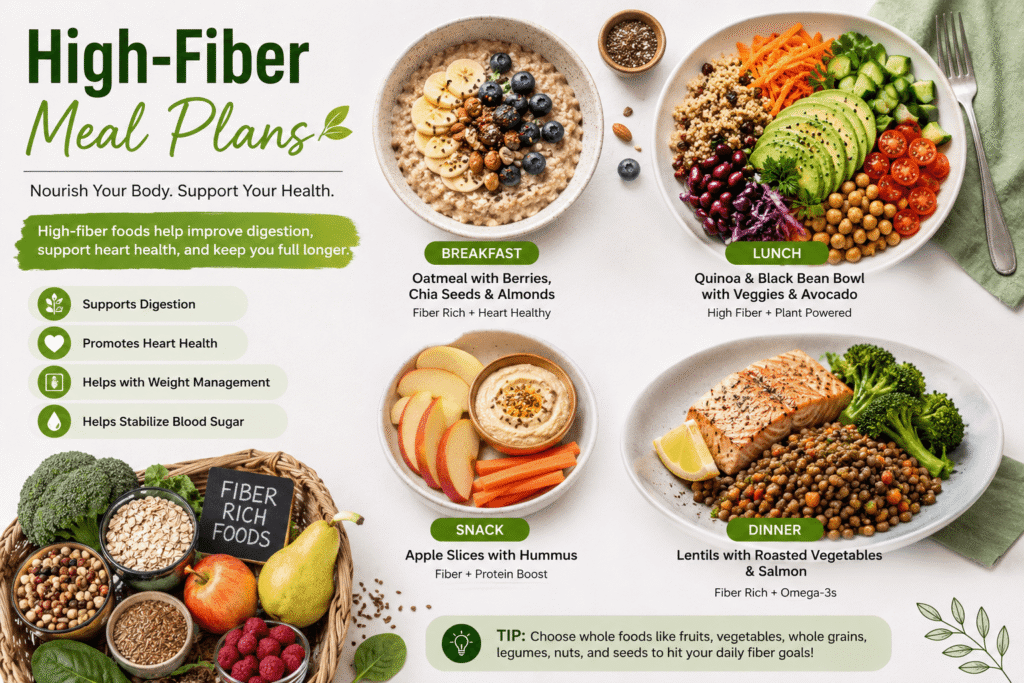
- Add berries and chia seeds to oatmeal.
- Choose whole-grain bread instead of white bread.
- Add chickpeas to a salad.
- Include vegetables in pasta sauces.
- Swap refined rice for brown rice, quinoa, or barley.
- Keep the skin on baked potatoes.
- Add lentils to soups, curries, and stews.
Build a Balanced Plate
A practical high-fiber plate may include:
- Half a plate of vegetables or salad
- One serving of protein, such as chicken, fish, tofu, eggs, beans, or lentils
- One high-fiber carbohydrate, such as brown rice, oats, quinoa, whole-grain pasta, or sweet potato
- A healthy fat source, such as olive oil, avocado, nuts, seeds, or tahini
Increase Fiber Gradually
A sudden jump in fiber can cause bloating or digestive discomfort for some people. Increase fiber gradually over one to two weeks and drink enough water throughout the day.
This is especially important for people who currently eat very little fruit, vegetables, legumes, or whole grains.
Plan for Convenience
The best meal plan is one you can follow. Keep convenient high-fiber foods available, including:
- Frozen vegetables
- Canned beans and lentils
- Pre-washed salad leaves
- Whole-grain wraps
- Oats
- Frozen berries
- Nuts and seeds
- Whole-grain crackers
- Hummus
Convenient ingredients can help make healthy choices easier during busy workweeks.
Sample High-Fiber Meal Ideas
High-Fiber Breakfast Ideas
- Overnight oats with chia seeds, berries, walnuts, and yogurt
- Whole-grain toast with avocado, tomato, and a boiled egg
- Greek yogurt with raspberries, flaxseed, and low-sugar granola
- Vegetable omelet with whole-grain toast
- Smoothie with spinach, berries, oats, chia seeds, and nut butter
High-Fiber Lunch Ideas
- Lentil soup with whole-grain bread and a side salad
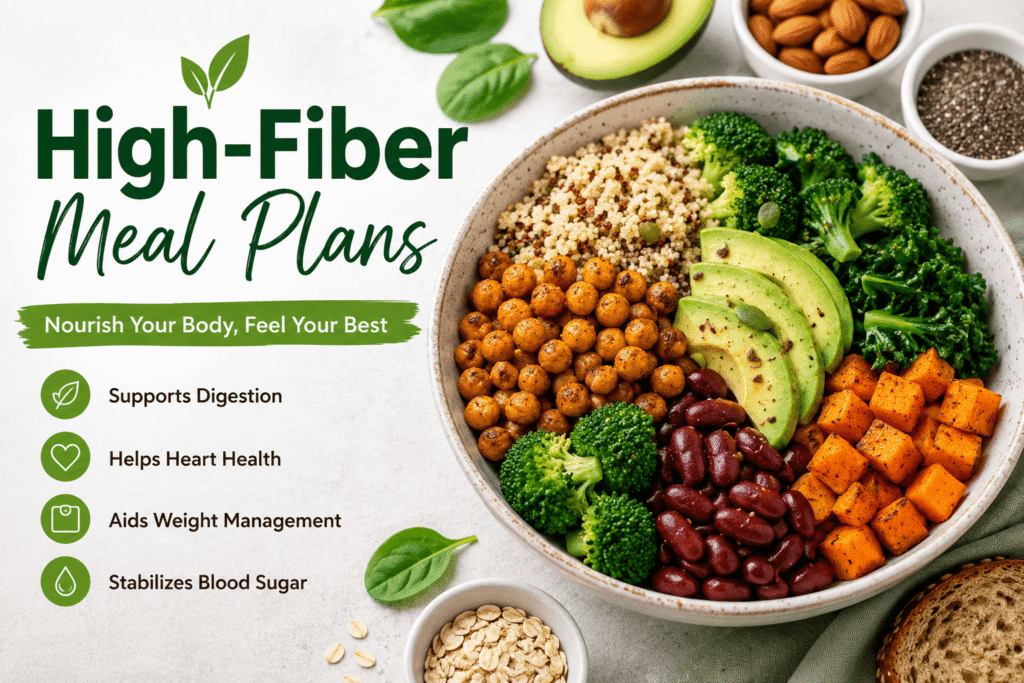
- Chickpea and quinoa bowl with roasted vegetables
- Whole-grain wrap with hummus, grilled chicken, spinach, and peppers
- Tuna and white bean salad with olive oil and lemon
- Leftover vegetable curry with brown rice
High-Fiber Dinner Ideas
- Black bean tacos with corn, avocado, salsa, and shredded cabbage
- Baked salmon with broccoli, spinach, hummus, and a skin-on potato
- Whole-grain pasta with lentil bolognese and roasted vegetables
- Chickpea curry with cauliflower, spinach, and brown rice
- Sheet-pan chicken with sweet potatoes, Brussels sprouts, and chickpeas
High-Fiber Snack Ideas
- Apple slices with peanut butter
- Carrots and hummus
- Pear with a handful of almonds
- Roasted chickpeas
- Popcorn with light seasoning
- Yogurt with berries and chia seeds
Common Mistakes to Avoid
Trying to Eat Too Much Fiber Too Quickly
Adding large amounts of beans, bran, or seeds overnight can cause discomfort. Start slowly and allow your digestion time to adjust.
Relying Only on Fiber Supplements
Fiber supplements may be useful in some situations, but food should usually come first. Whole foods provide additional nutrients, flavor, texture, and variety.
Eating the Same Foods Every Day
Oats and beans are useful, but variety creates a stronger meal plan. Rotate fruits, vegetables, grains, legumes, nuts, and seeds throughout the week.
Ignoring Protein and Healthy Fats
A high-fiber meal should still be balanced. Pair fiber-rich carbohydrates with protein and healthy fats to create satisfying meals.
High-Fiber Meal Planning Checklist
Use this checklist when creating your weekly plan:
- Include at least one fruit or vegetable at every meal.
- Choose whole grains more often than refined grains.
- Add beans, lentils, or chickpeas to at least three meals per week.
- Keep frozen vegetables and canned beans available for quick meals.
- Include nuts, seeds, or avocado as healthy fat sources.
- Prepare one fiber-rich breakfast option in advance.
- Choose simple snacks such as fruit, yogurt, popcorn, or hummus.
- Increase fiber gradually and drink enough water.
Create a Meal Plan That Works for Your Lifestyle
Healthy eating should fit into real life. Whether you are managing a busy family schedule, working long hours, building a wellness routine, or trying to improve your daily food choices, high-fiber meal plans can make healthy eating more practical.
At Fit Food Journey, we help make nutritious eating easier with approachable recipes, meal planning ideas, and practical wellness guidance.
Ready to make your meals more satisfying, balanced, and enjoyable? Explore our healthy recipes, download a meal planning guide, or contact our team for personalized nutrition-focused support.
Frequently Asked Questions
How much fiber should I eat per day?
Most adults should aim for roughly 25 to 38 grams of fiber per day, depending on age, sex, calorie needs, and health goals. A common guideline is about 14 grams of fiber per 1,000 calories.
What are the best foods for high-fiber meal plans?
Some of the best foods include oats, beans, lentils, chickpeas, berries, pears, apples, vegetables, whole grains, nuts, seeds, and potatoes with the skin on.
Can high-fiber meal plans help with weight management?
High-fiber meals can be more filling and satisfying, which may help people manage hunger and make balanced food choices. However, overall calorie intake, activity levels, sleep, stress, and food quality also matter.
Should I take a fiber supplement?
Some people may benefit from fiber supplements, but whole foods are usually the best starting point because they provide vitamins, minerals, and other beneficial nutrients. Speak with a healthcare professional if you have digestive concerns or medical conditions.
What should I do if eating more fiber causes bloating?
Increase fiber slowly, drink more water, and spread high-fiber foods across the day. If symptoms continue or become severe, consult a qualified healthcare professional.
Conclusion
High-fiber meal plans do not need to be complicated, expensive, or restrictive. Small changes such as choosing whole grains, adding beans to meals, eating more vegetables, and including fruit and seeds can make a meaningful difference.
The key is consistency. Build meals around foods you enjoy, prepare simple ingredients in advance, and increase fiber gradually. With a practical approach, high-fiber meal plans can support better digestion, steadier energy, satisfying meals, and long-term healthy eating habits.